DNA CREATE
The Week
Dev Neuro Academy presents DNA CREATE, a new DNA programme delivered for the first time in the Summer of 2025.
DNA CREATE took participants on an inspiring journey at the crossroads of neuroscience and creativity. During the week, participants explored developmental neurobiology through four central themes, transforming their discoveries into creative group projects. The programme culminated in a public exhibition at the Science Gallery, where participants shared their collaborative creations. Alongside the exhibition, audiences enjoyed talks and a lively Q&A panel, giving the DNA cohort the chance to share their insights and experiences from an unforgettable week.
The week was focussed on creativity not only as an output but also as an approach and mindset. We looked at:
❖ Ways in which art and creative projects can be great ways of exploring, sharing and communicating science
❖ Science as an inherently creative discipline
❖ Uncovering new perspectives and collaborative approaches through creativity in science
We were particularly interested in how creativity can open up new ways of understanding what it means to be a scientist. We were excited by how creativity might offer opportunities for participants to feel more confident in bringing all of themselves to their identity as a scientist, and to build confidence in curiosity and thinking in new and unconventional ways.
The DNA CREATE Cohort
The 2025 DNA CREATE Cohort consisted of 40 students drawn from our partner schools in and around London. As ever, the programme was supported and delivered by an incredible team including DNA Champions and Alumni, King’s undergraduate interns & researchers, alongside artists and collaborators.
Self Portraits
DAY 1
The week began with an opportunity for participants to get to know one another. First as individuals, and then in their groups. Across the week, these small groups of participants worked together to finish a group project.
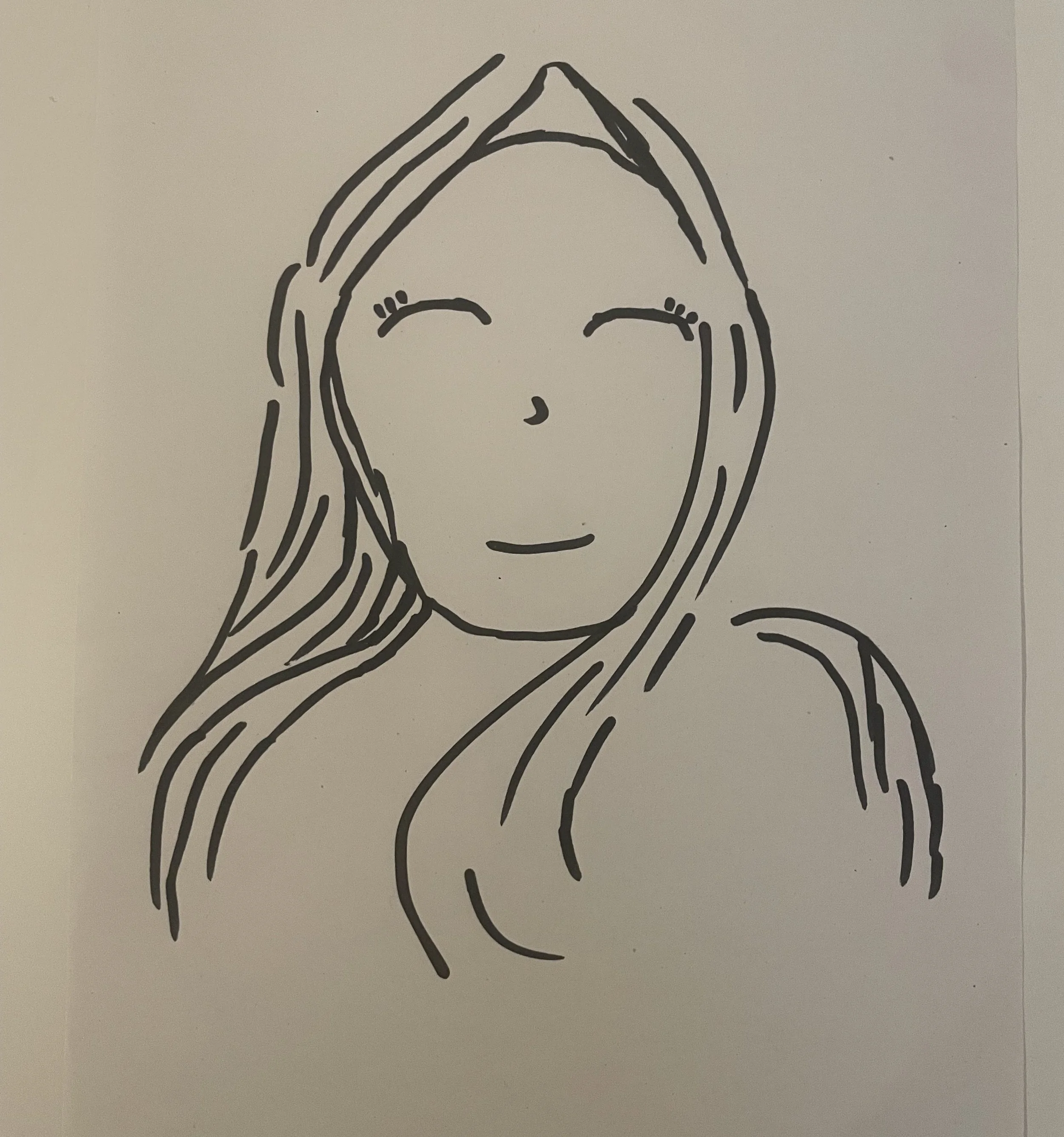
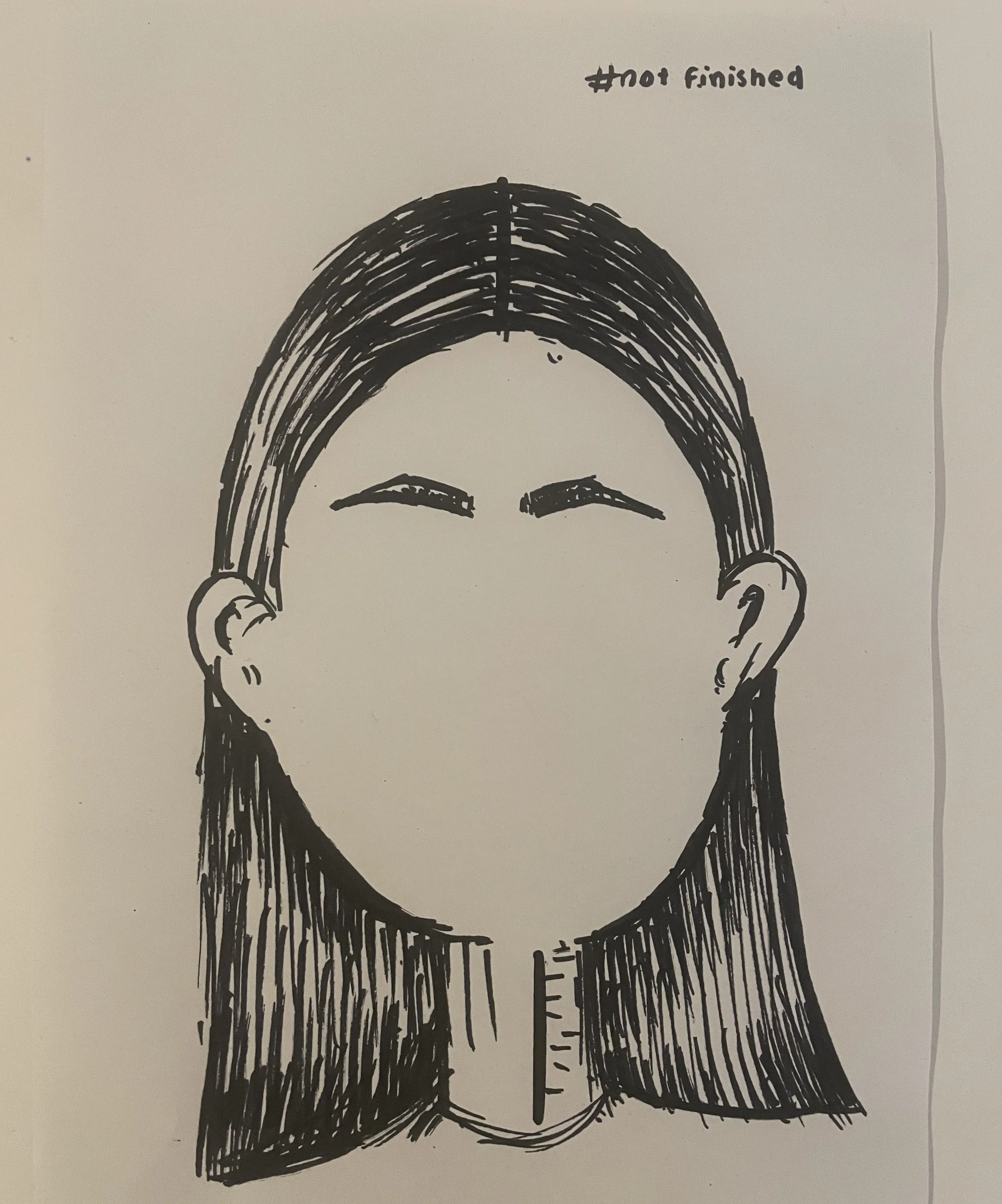
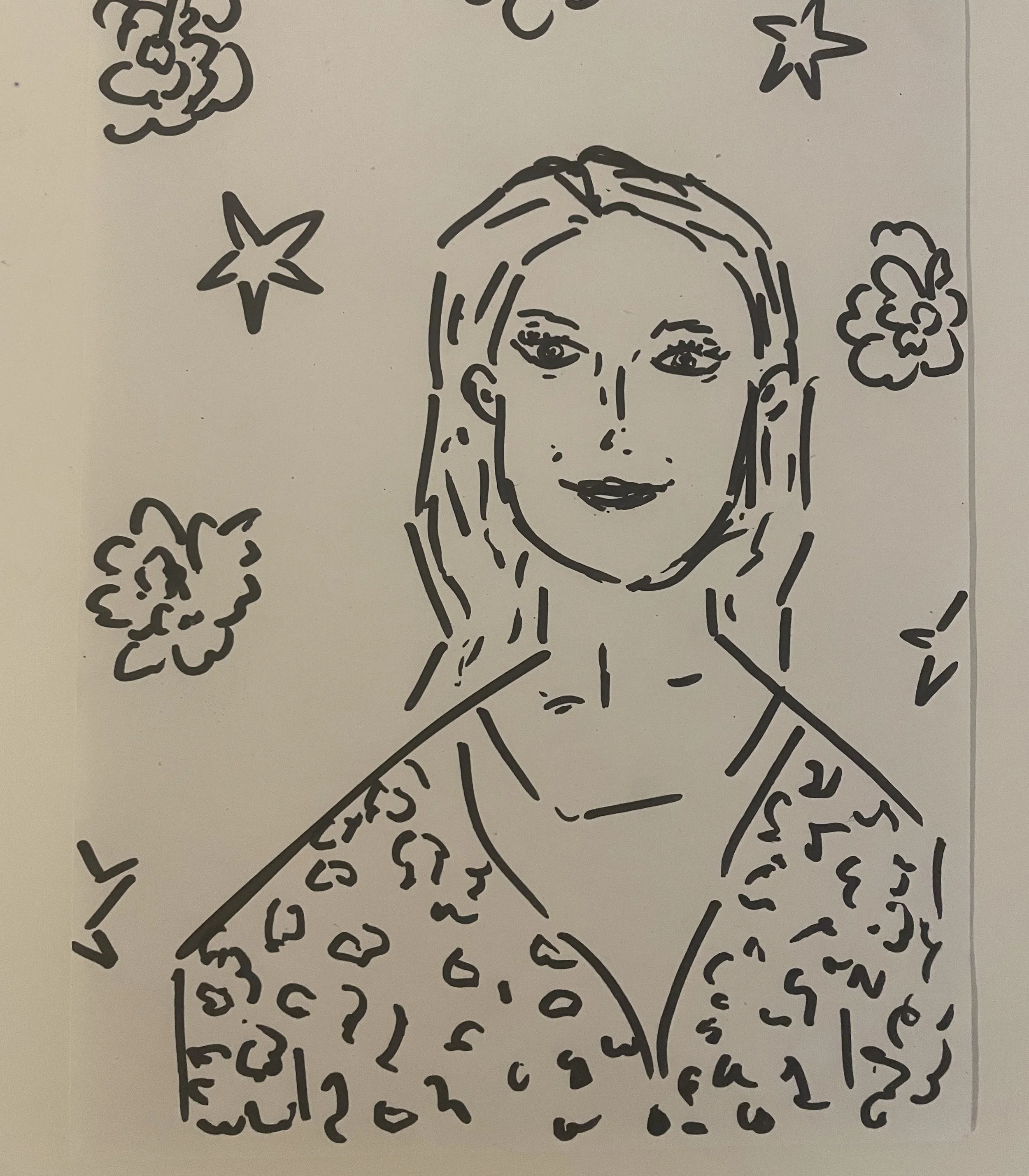
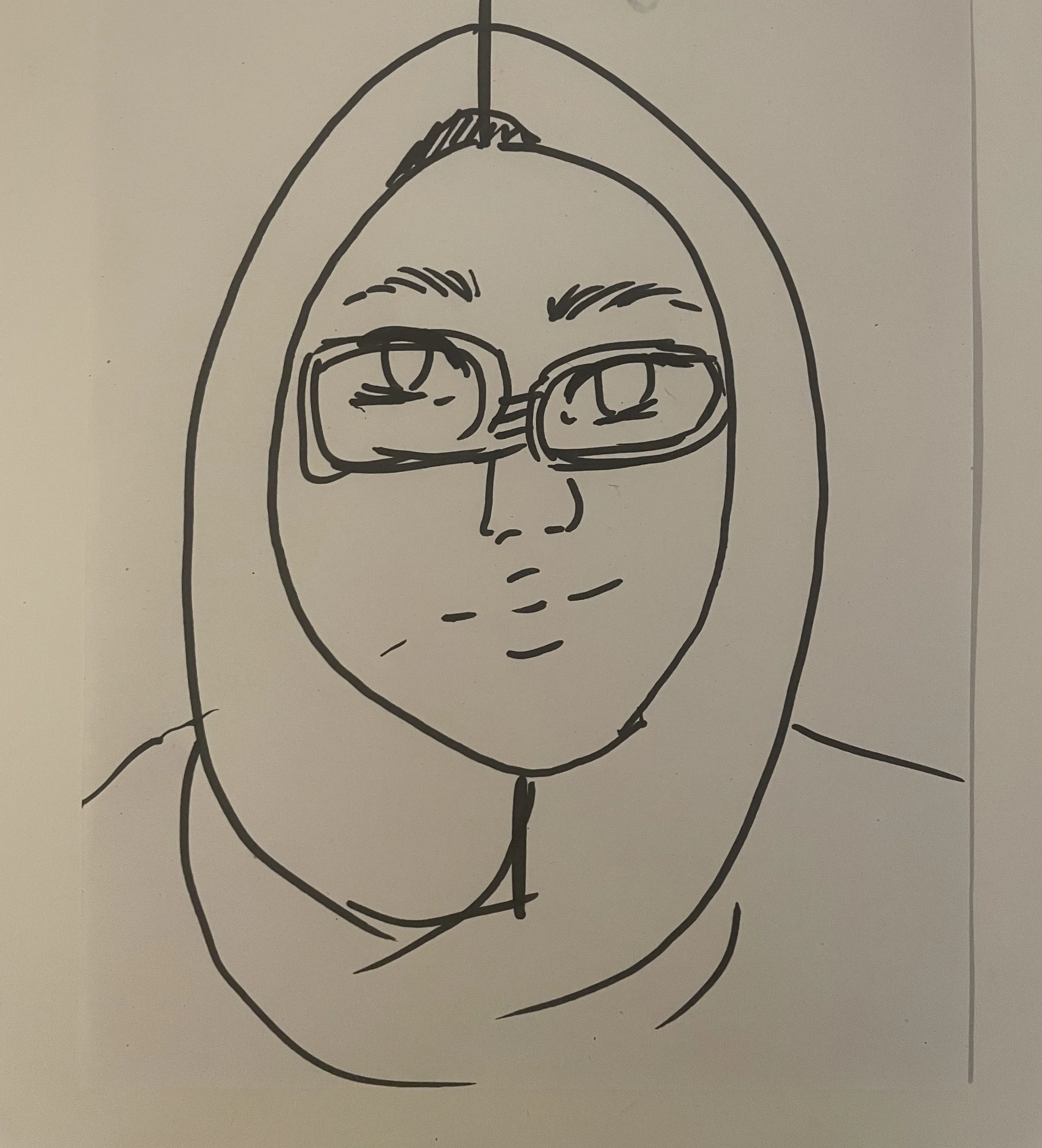
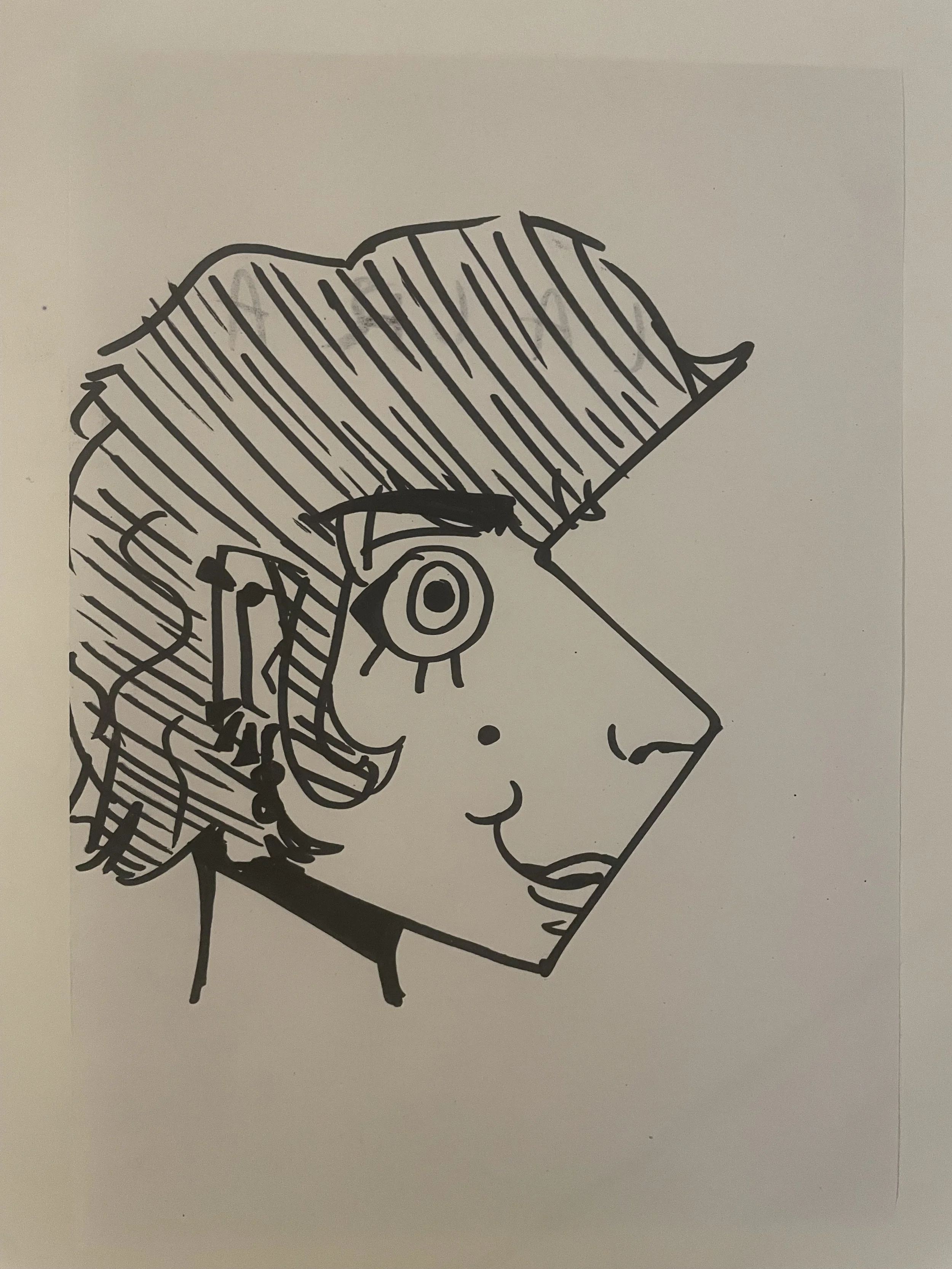
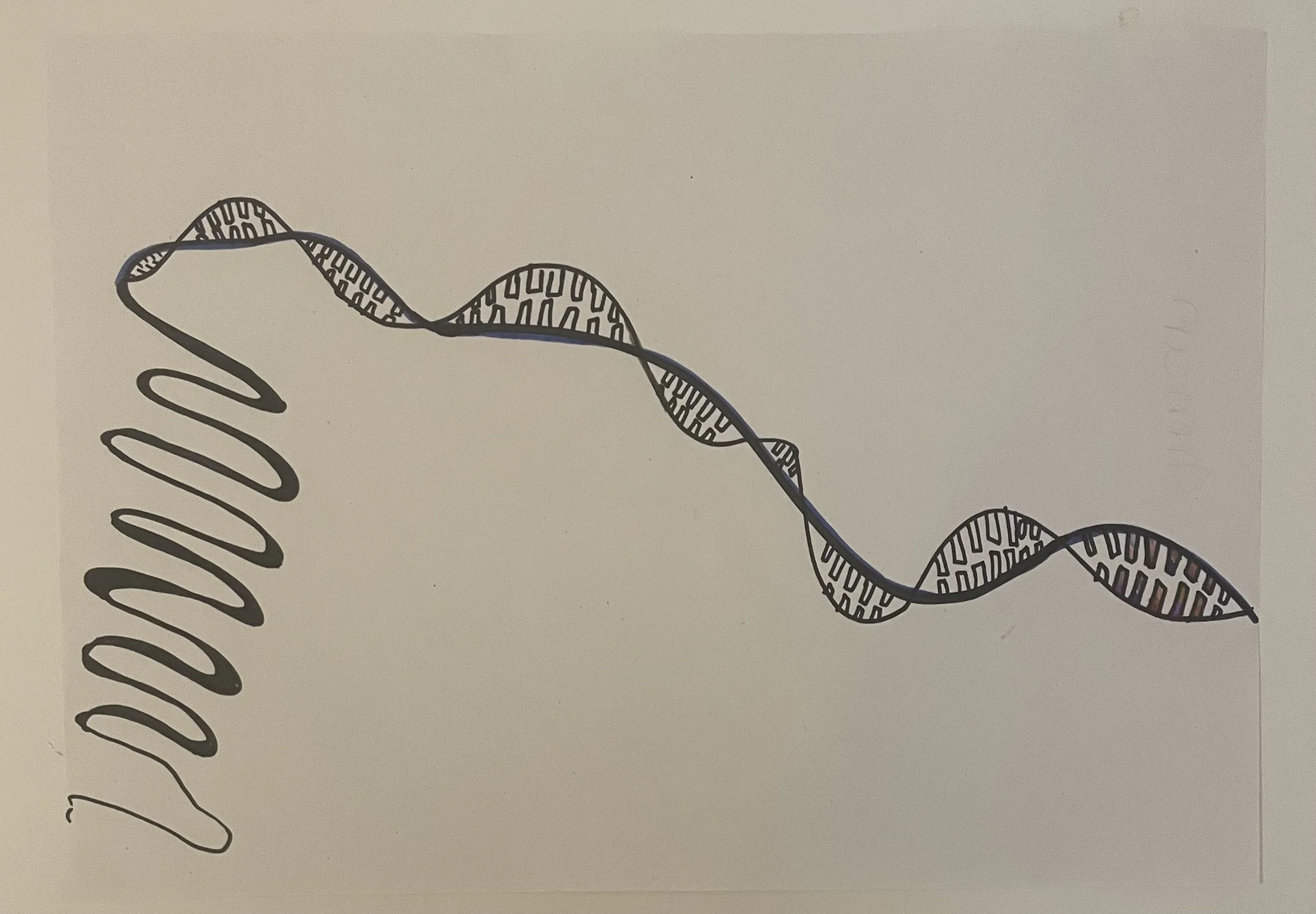
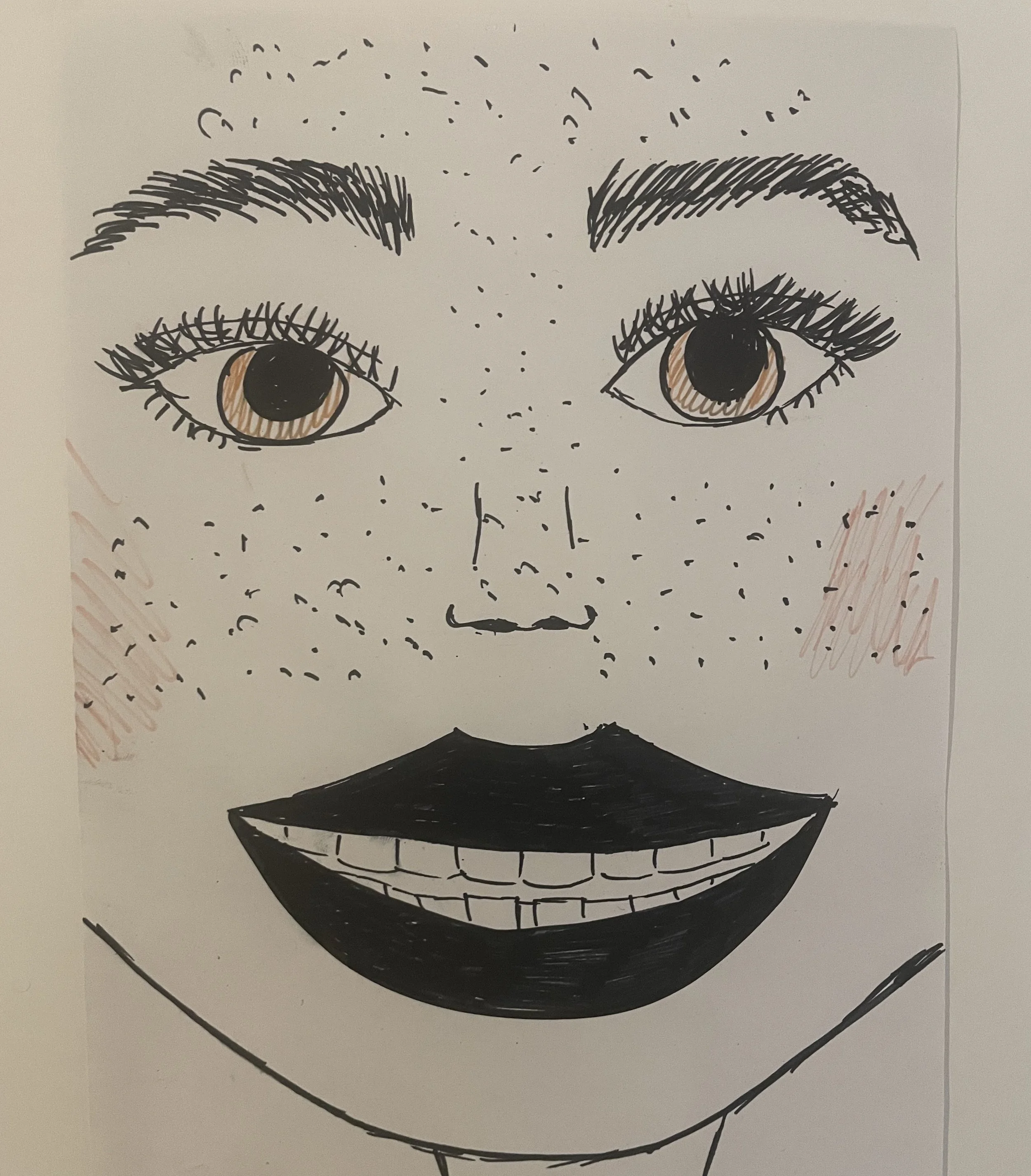
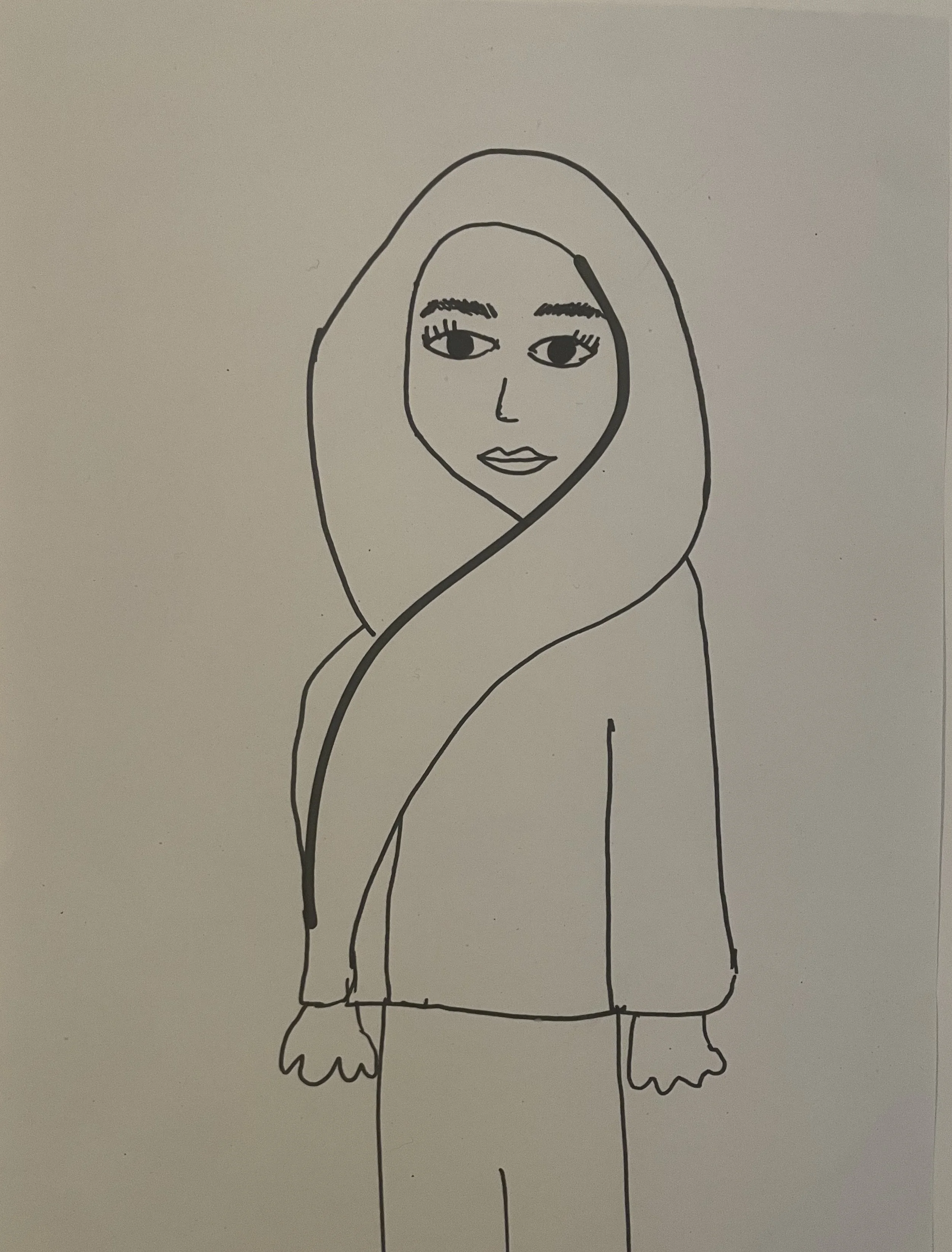
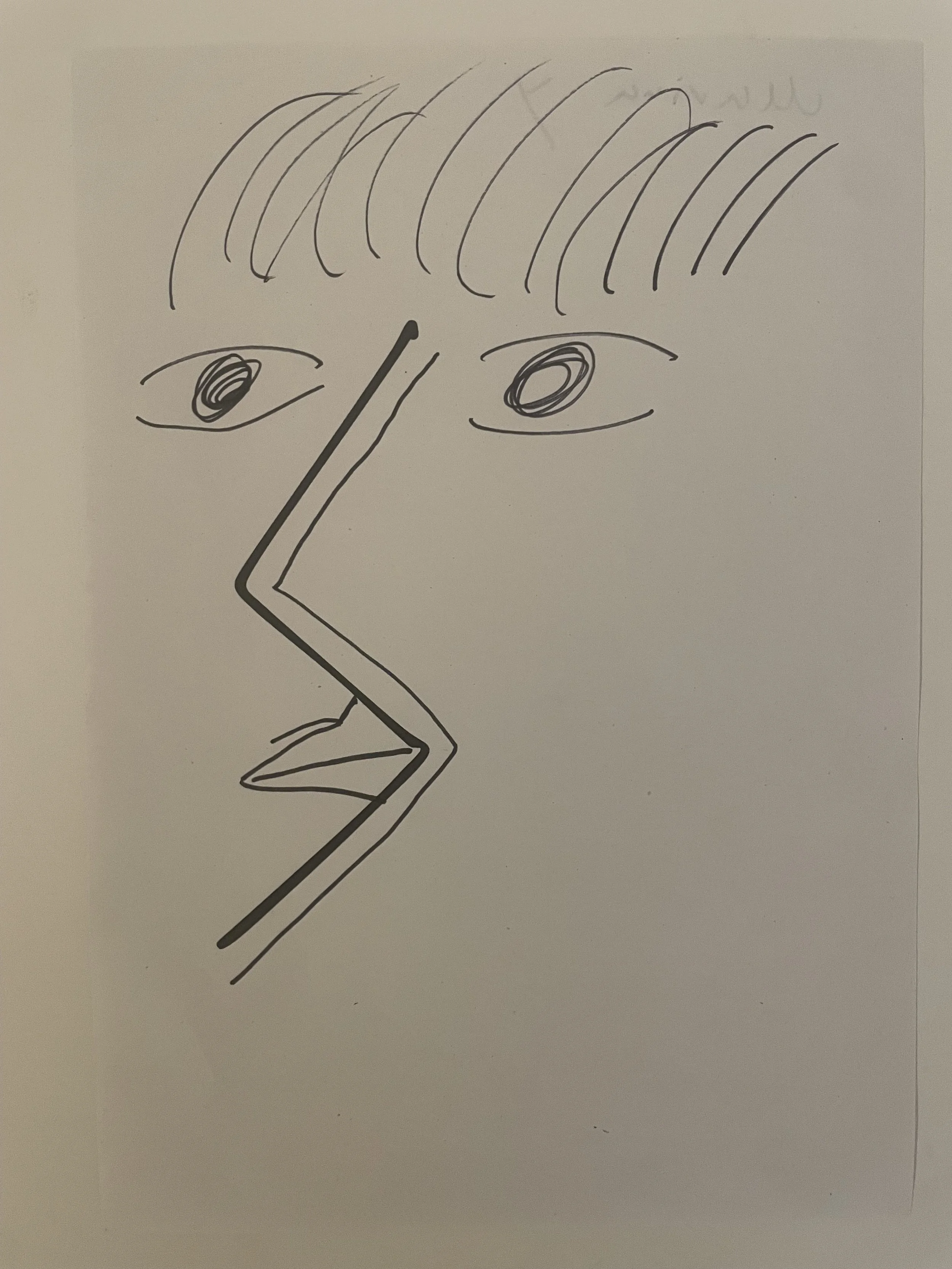
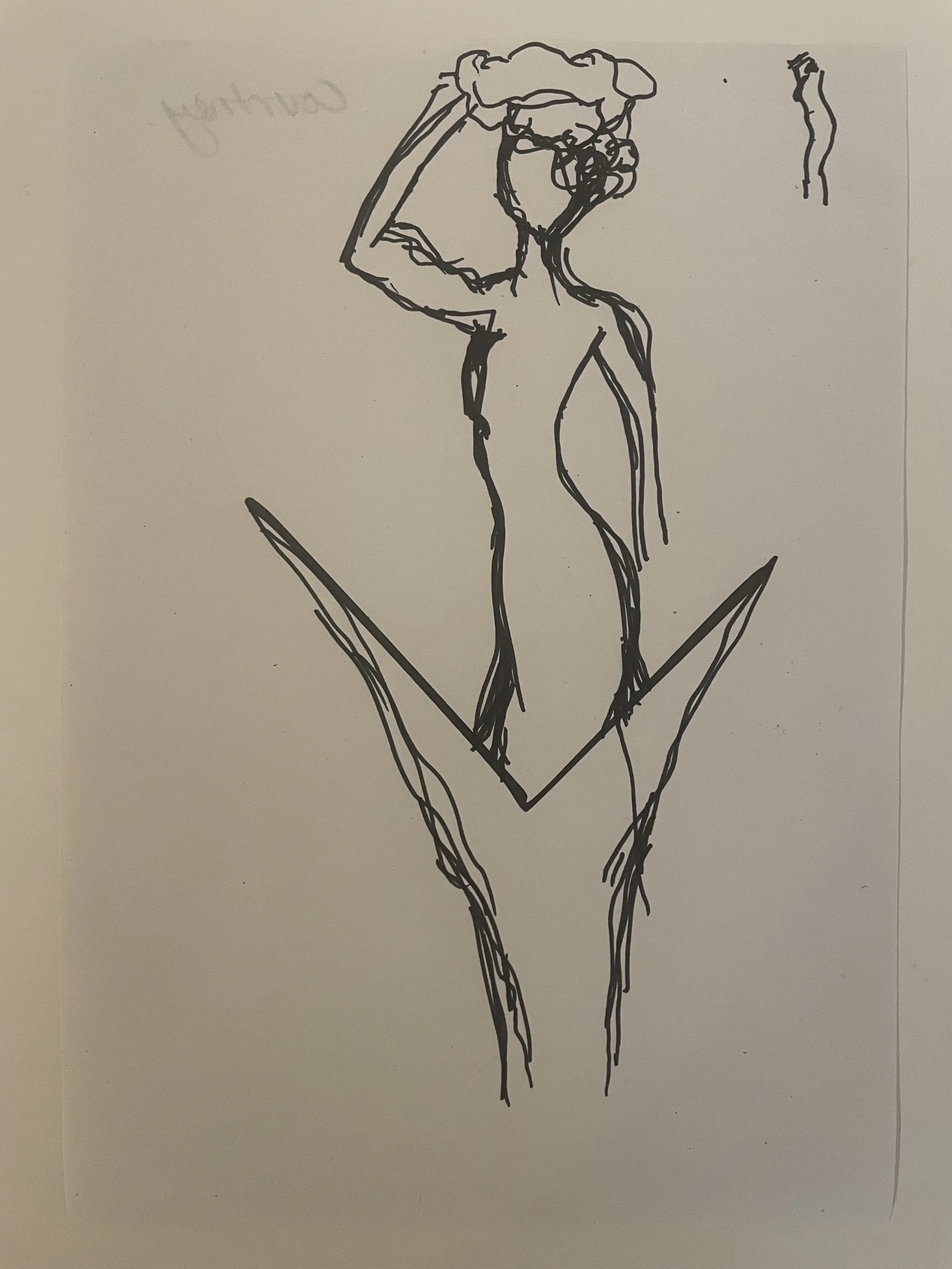
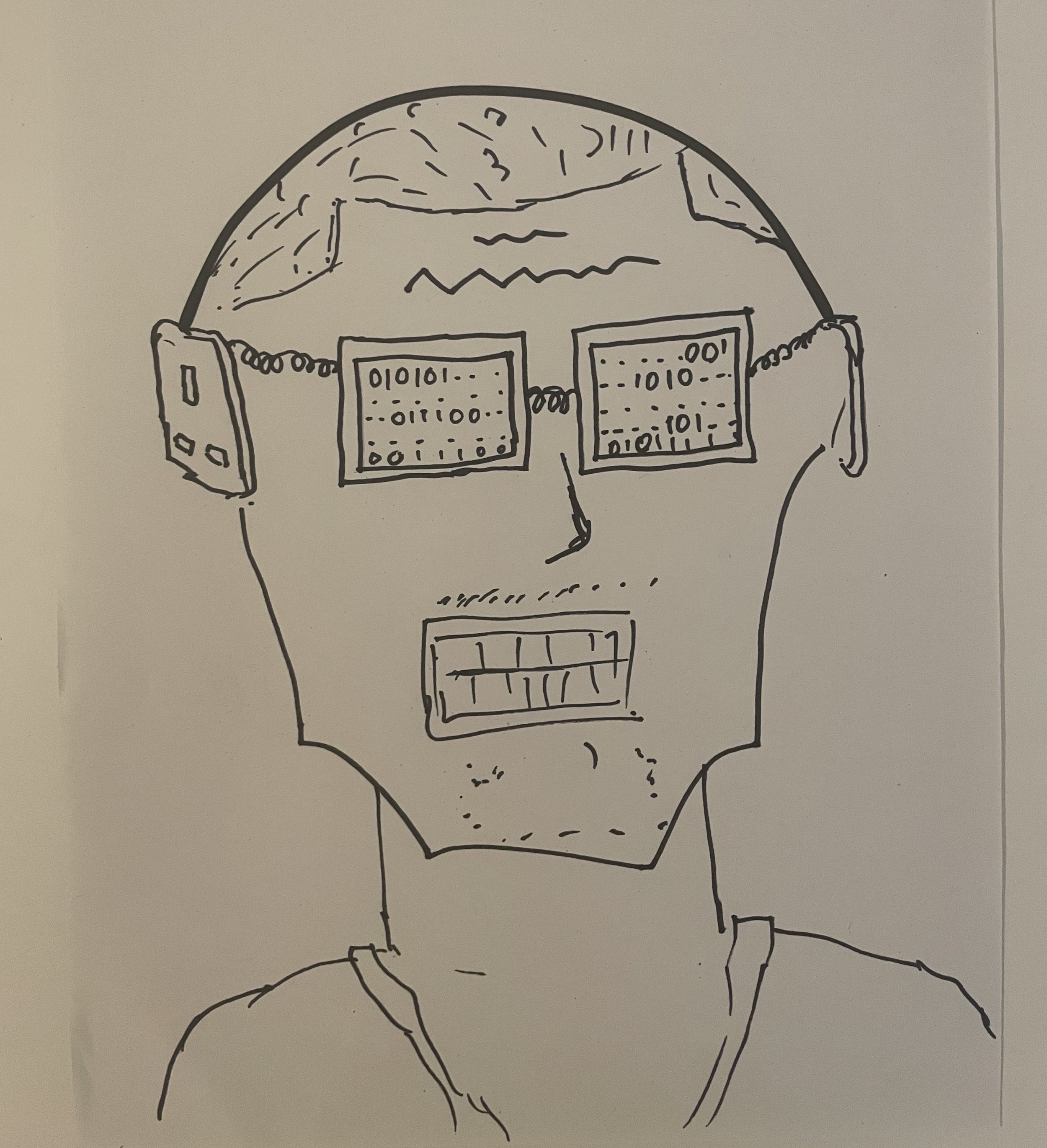
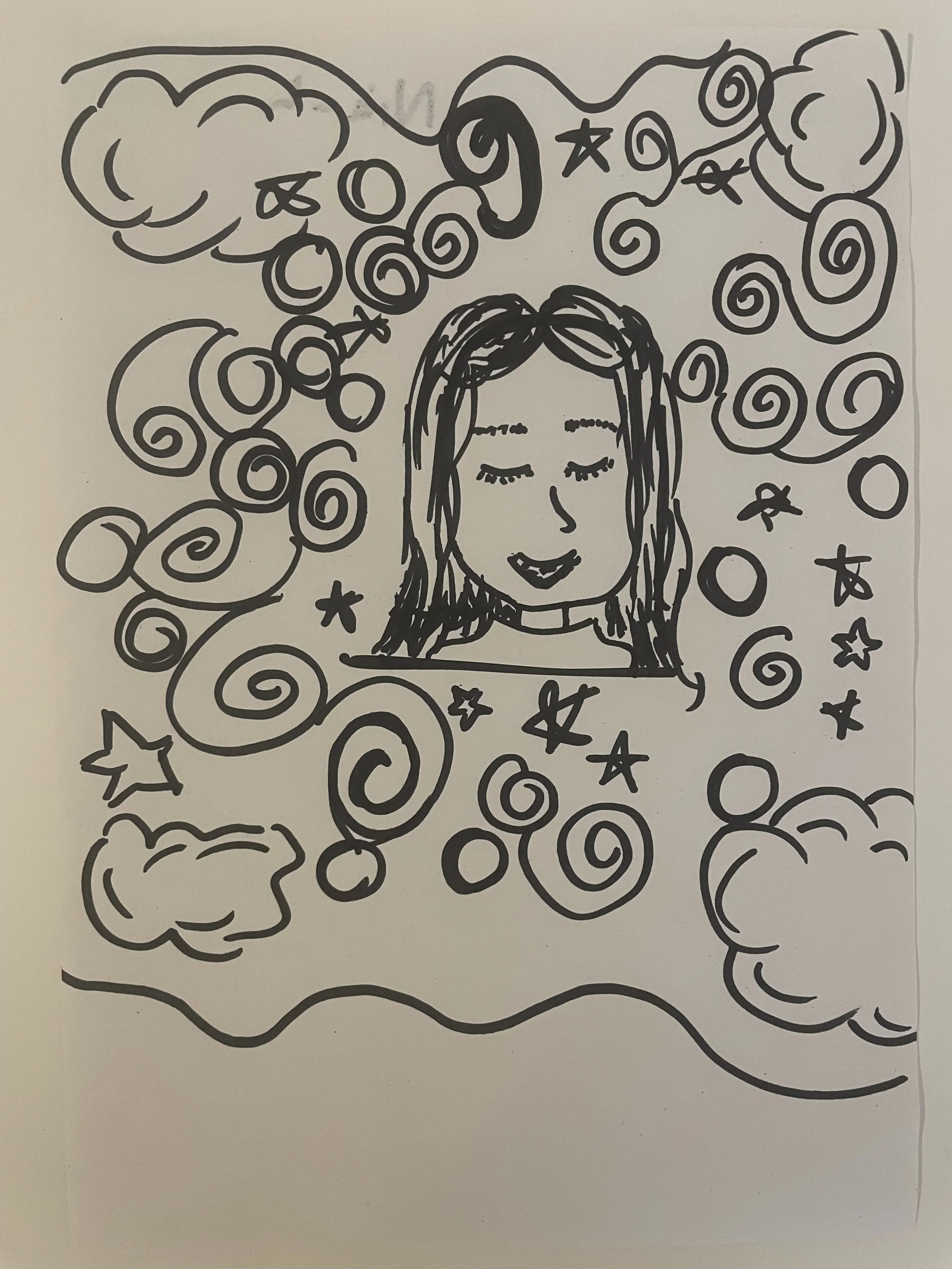
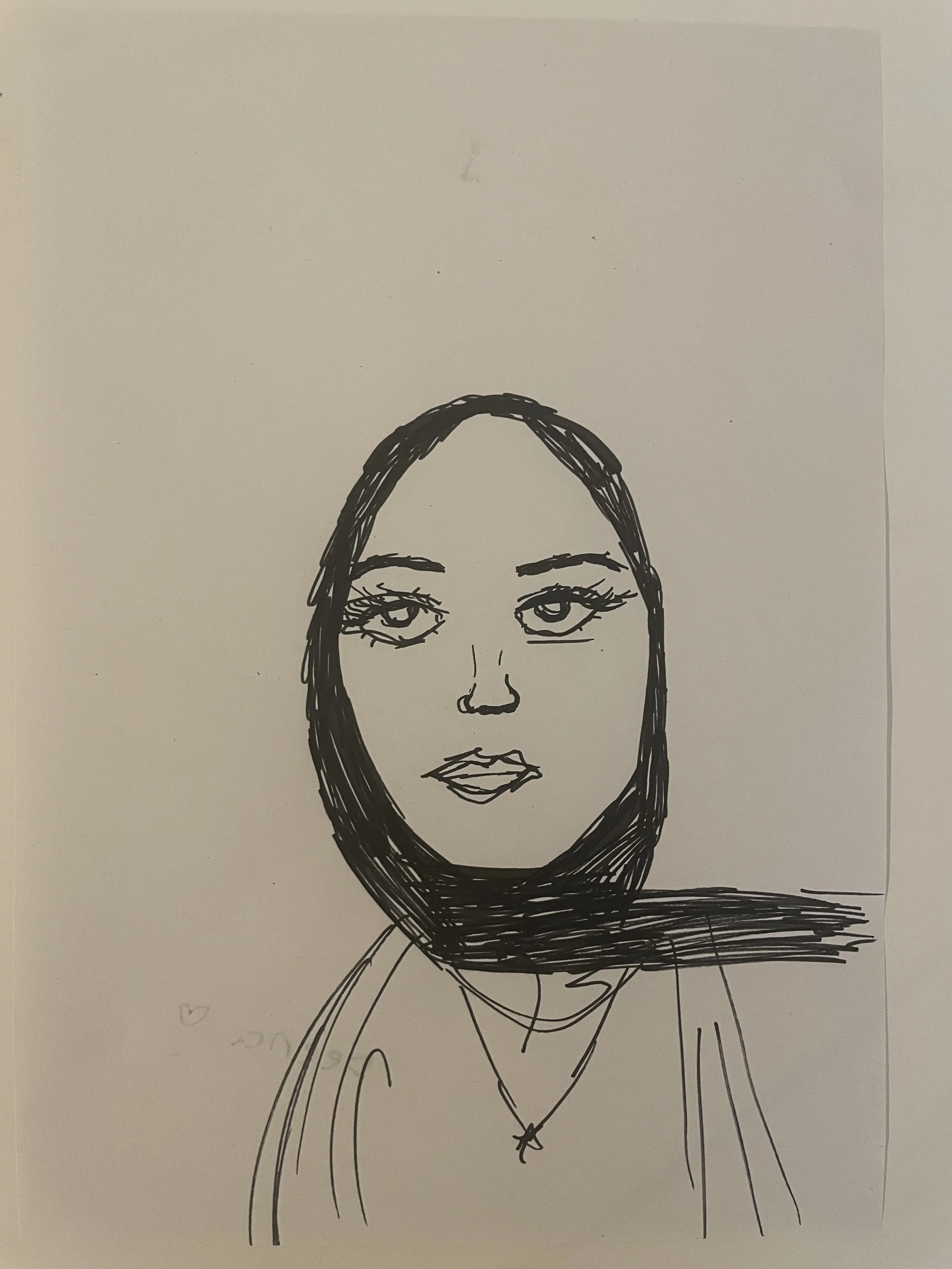
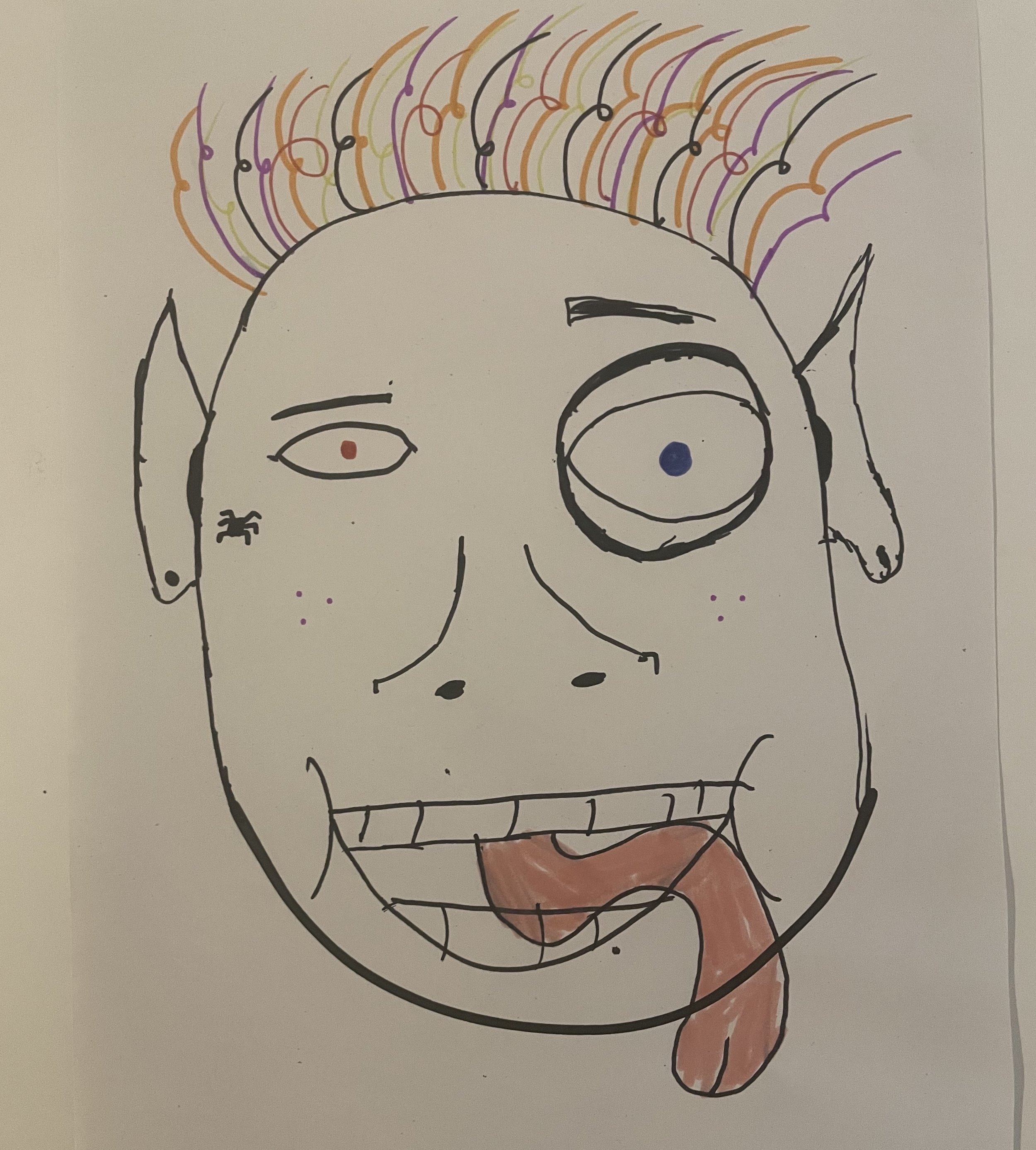
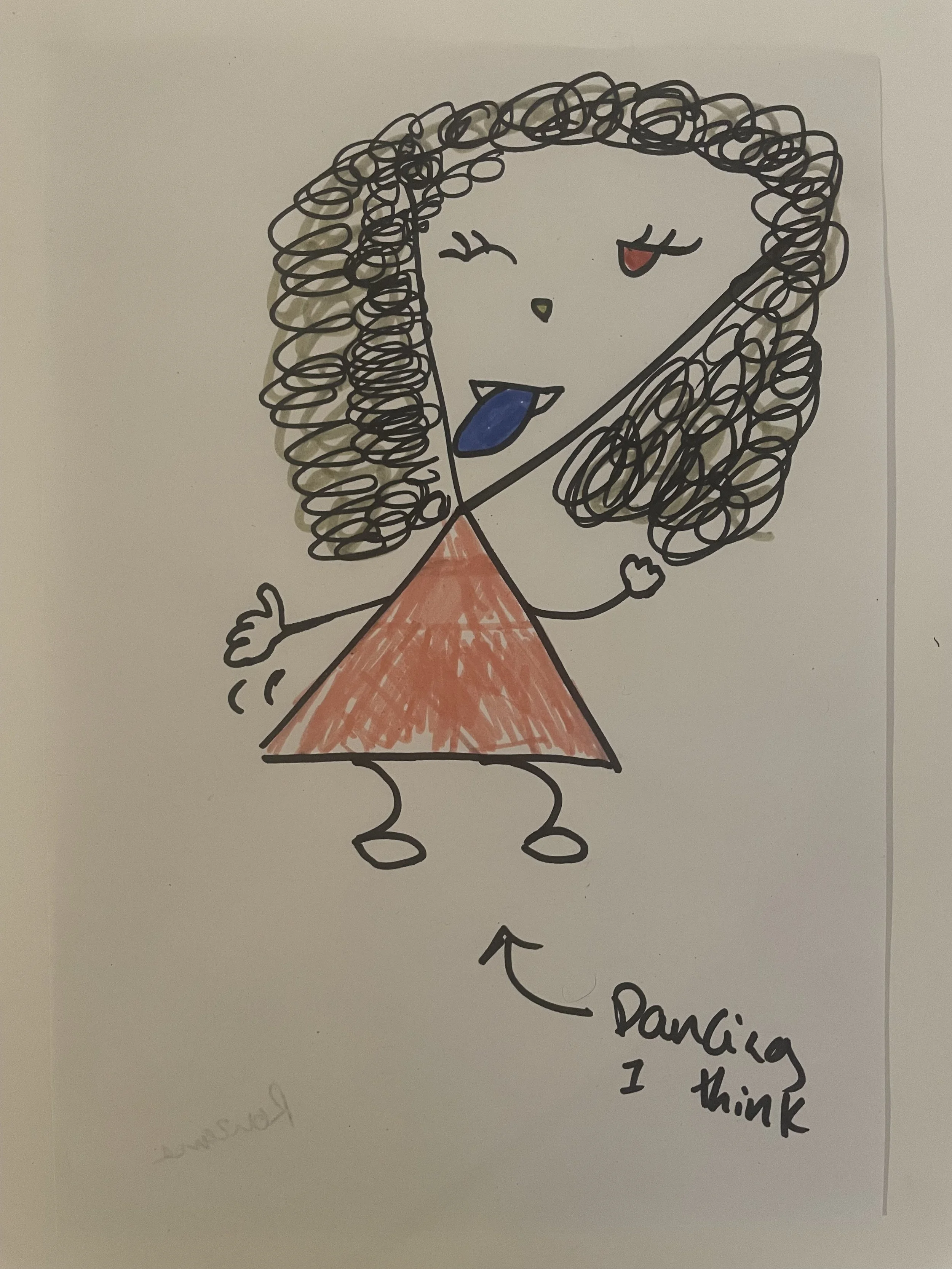
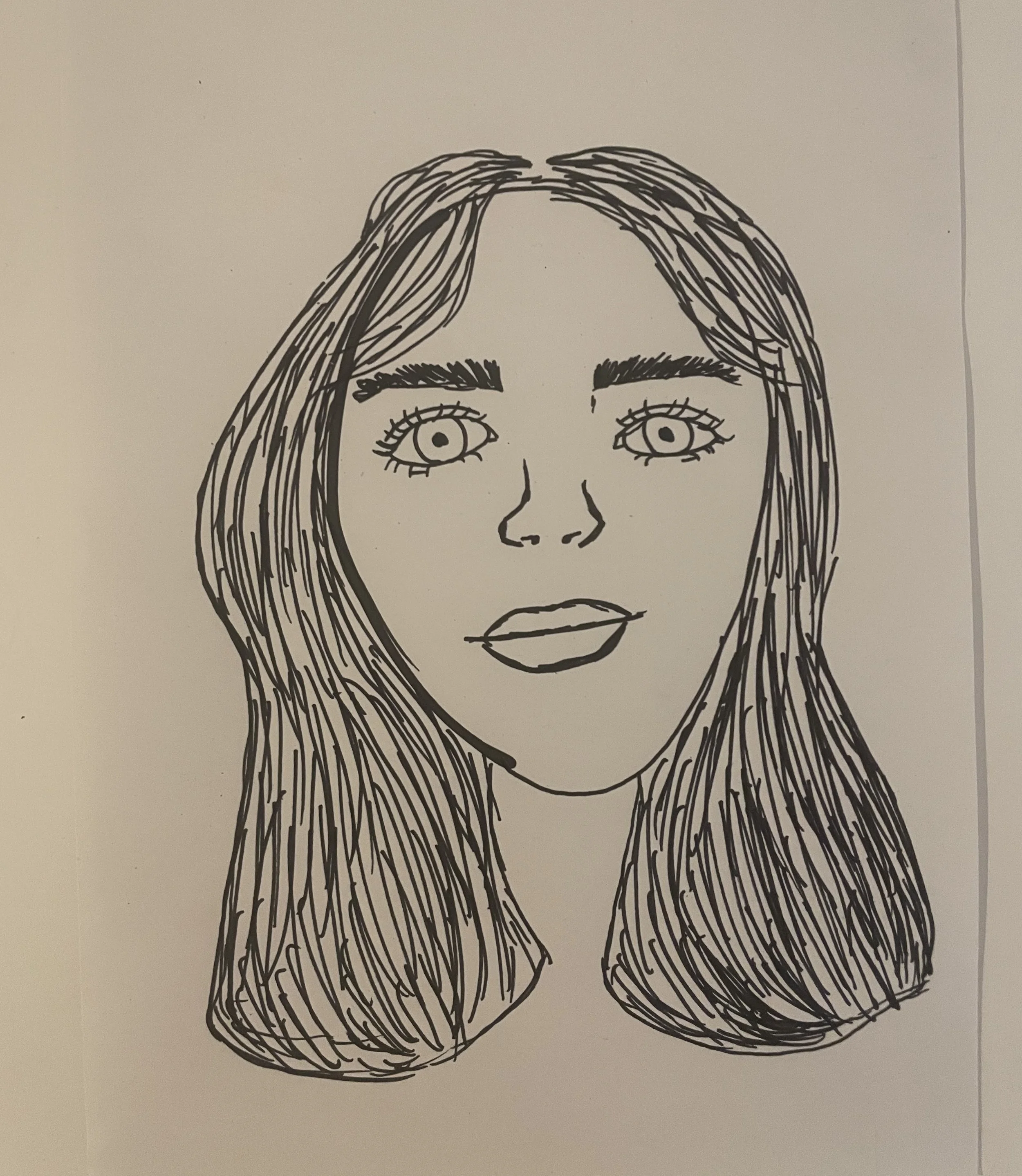
We began with self portraits - getting to know the individuals. Participants were given a piece of paper with a single mark, and then invited to incorporate that mark into a self portrait. Portraits could be literal or metaphorical, but just had to give a sense of who you are and what you were bringing to the week.
Group Mascots
DAY 1
Then we got to know groups.
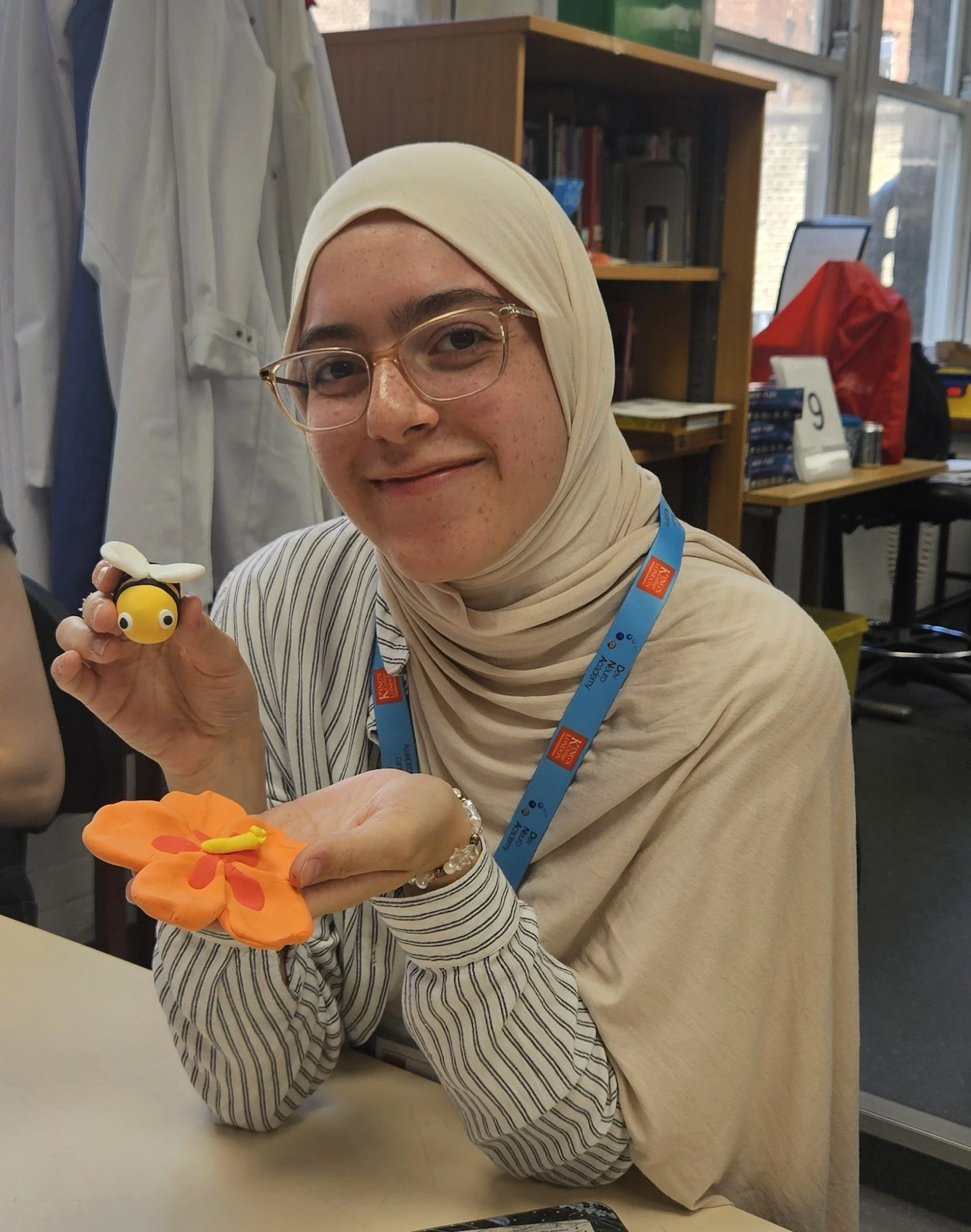
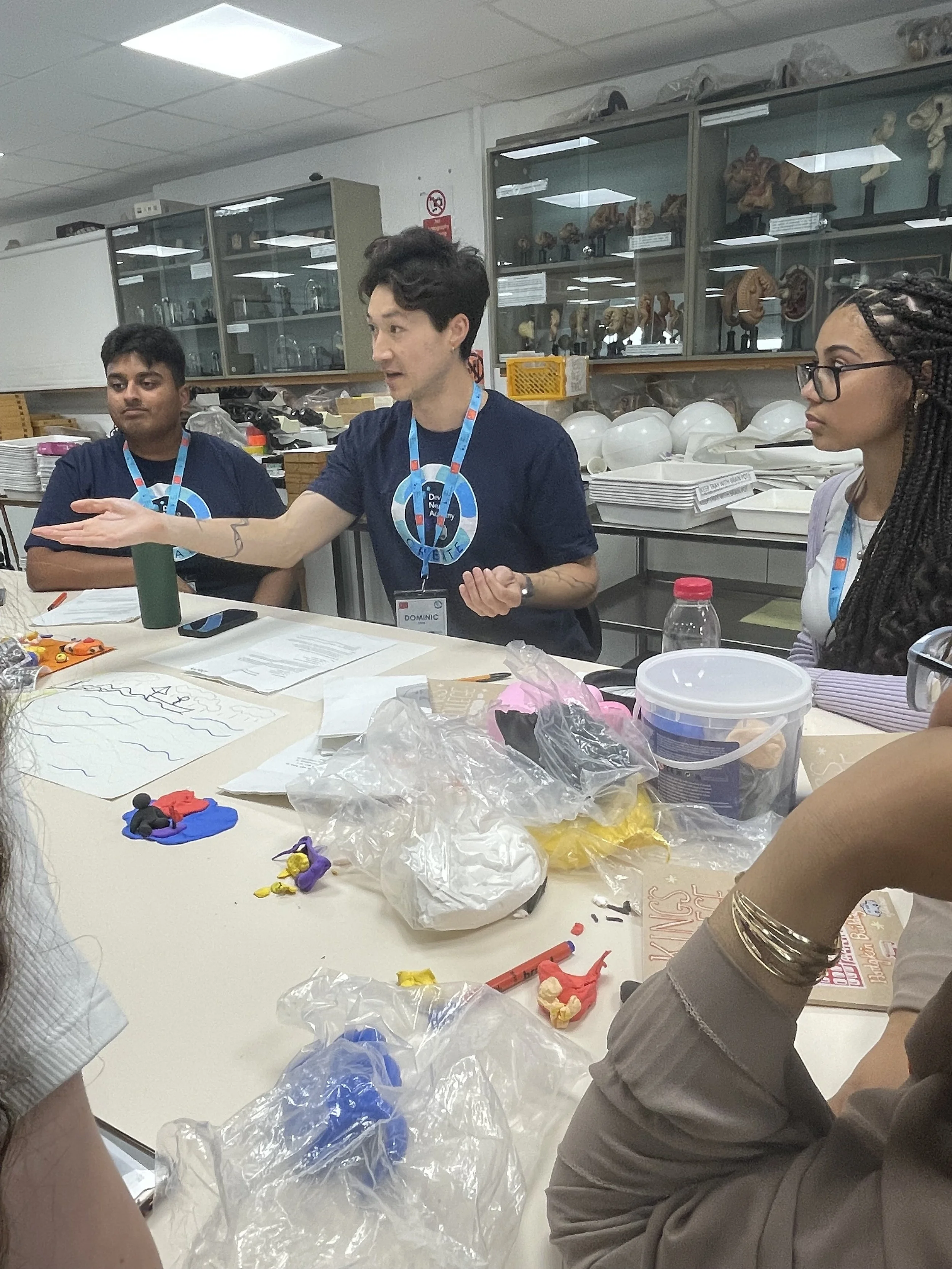
Each project group selected a theme and used silk clay to sculpt characters connected to the theme which they felt reflected their personalities, both as individuals and as part of their collective group identity. The project groups then arranged their individual characters as part of a group and kept the arrangements on their tables for the week as mascots. This was a nice way to bond the project groups and create a sense of belonging.
DAY 1
Neuroscience Carousel
The week was shaped by exploration of four key developmental neurobiology themes:
branching & patterning
growth, maintenance & decay
signals
behaviour & interaction
On Tuesday afternoon participants were introduced to these fundamental neurobiology concepts in a neuroscience carousel of activities, each activity connected to one of the four key themes.
As participants moved round the carousel, they engaged in a different activity for each of the themes.
Each session offered an overview of the science underpinning the theme: What does branching and patterning mean in the brain? Why are signals important to creating pattern and organised structure in neurodevelopment? Participants then engaged in a creative exercise that allowed them to explore and experience the theme in more detail.
Branching & Patterning
Brain cells (neurons) have complex branching structures.
The structure of neurons reflects their function and development of these structures is guided by signals in the brain.
Ink Neurons
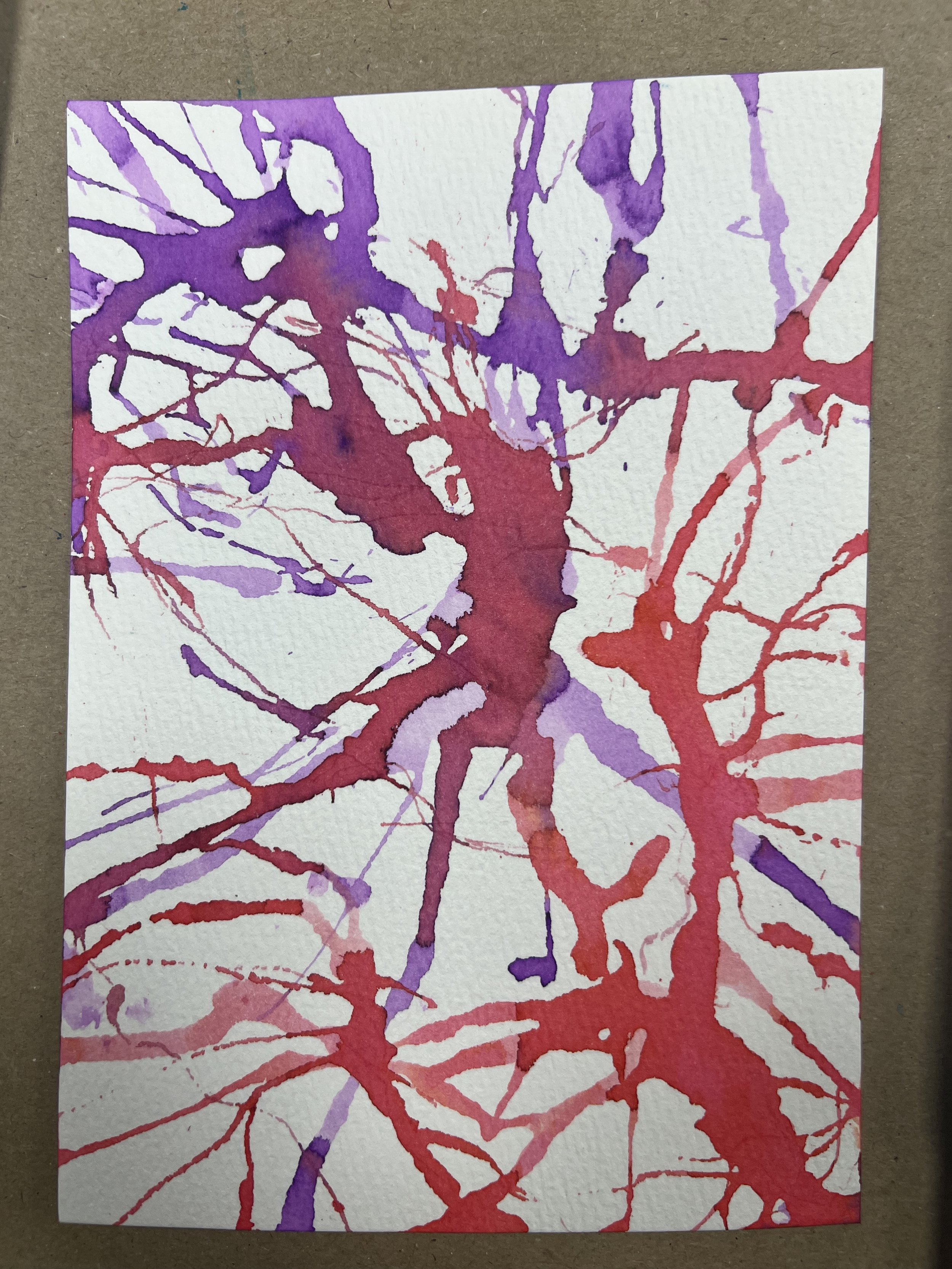
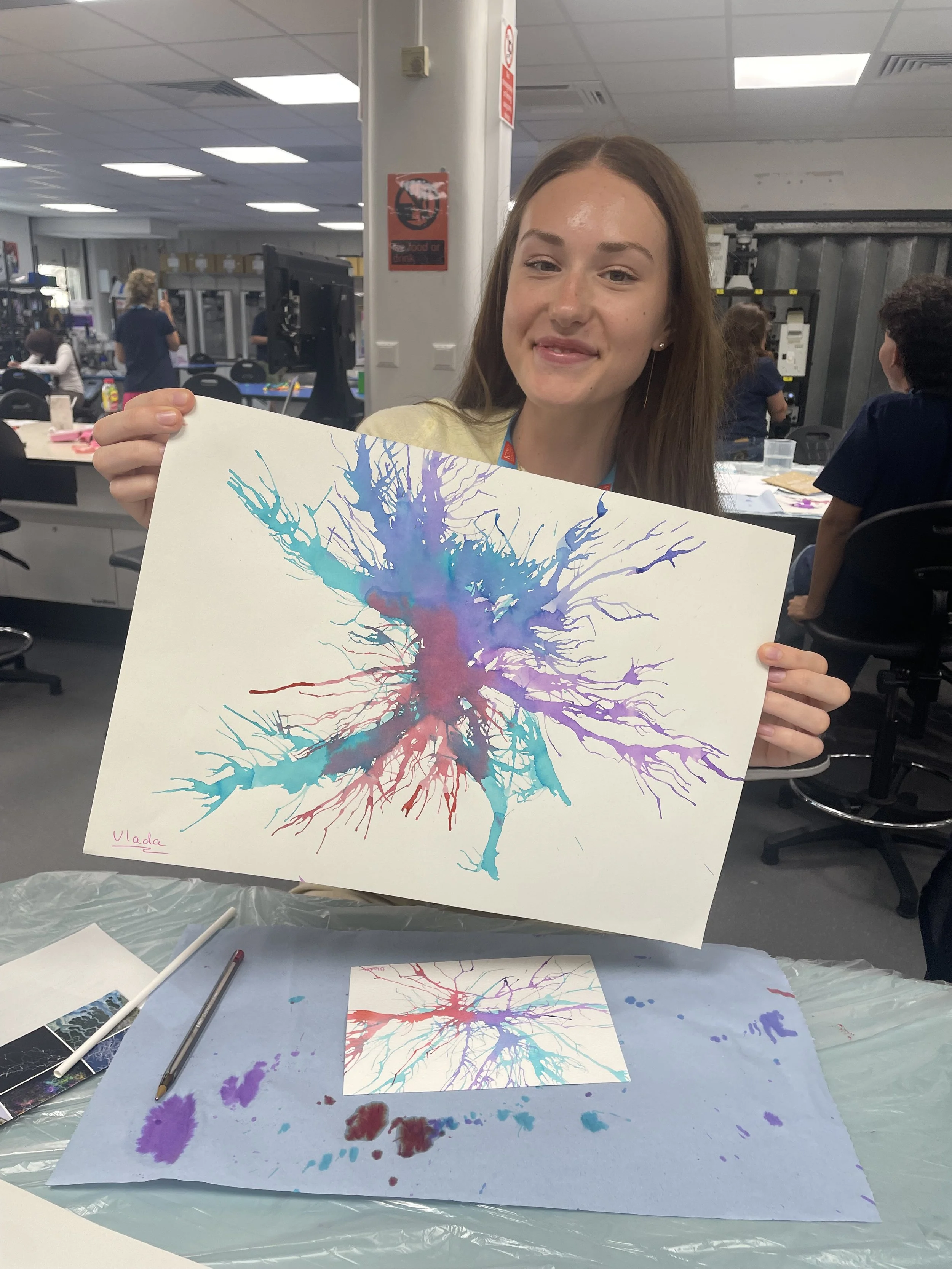
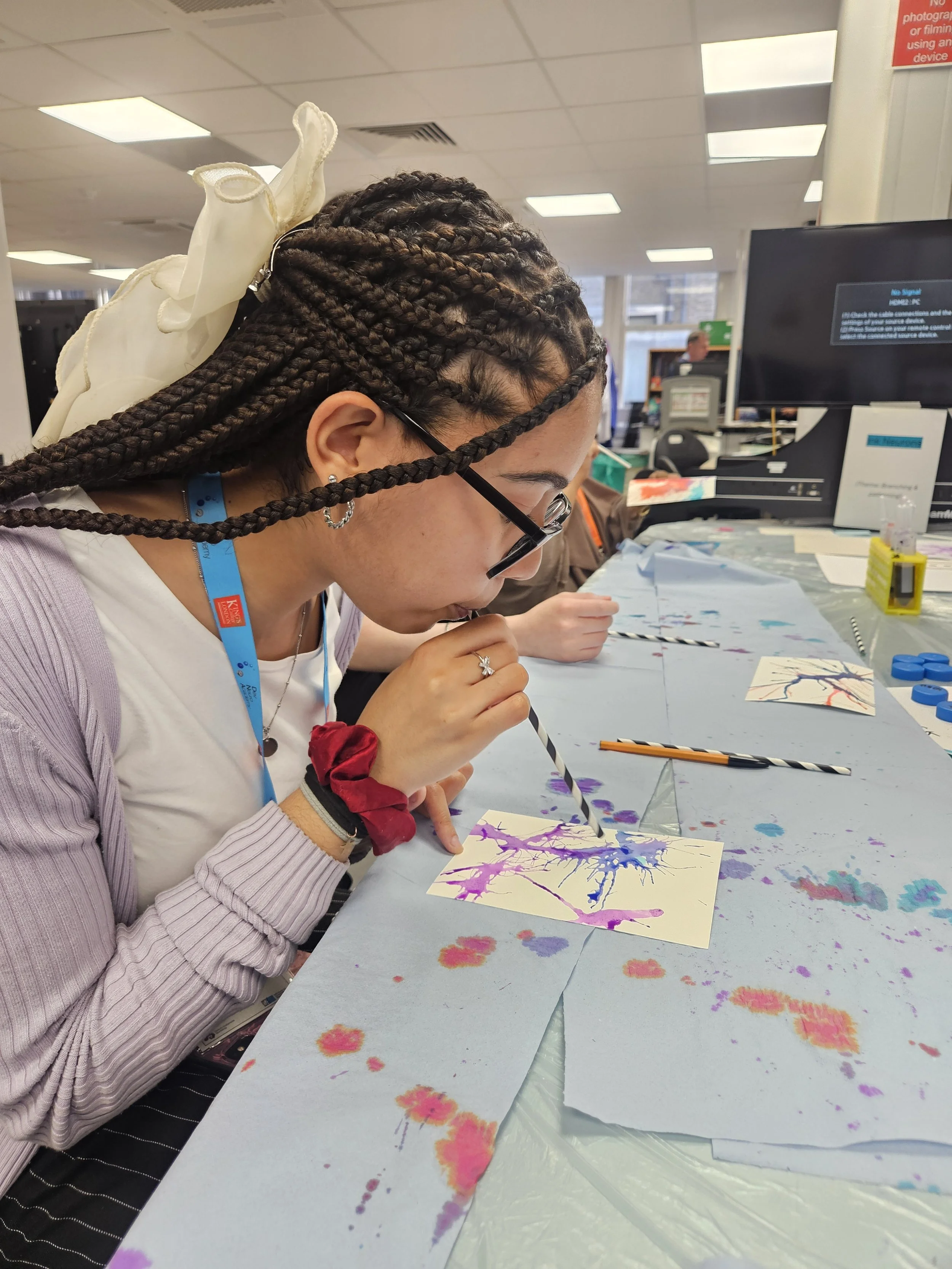
To explore branching and patterns we created ink neurons. When blowing ink on sheets of paper, you see incredible branching patterns emerge, which mimic the shapes and branching patterns of neurons in the brain.
Growth, Maintenance & Decay
Brain growth is a product of cells dividing, which they do in order to multiply, but growth also involves a large amount of cell death. Cell death adjusts cell numbers and sculpts brain circuits.
Bubble Cells
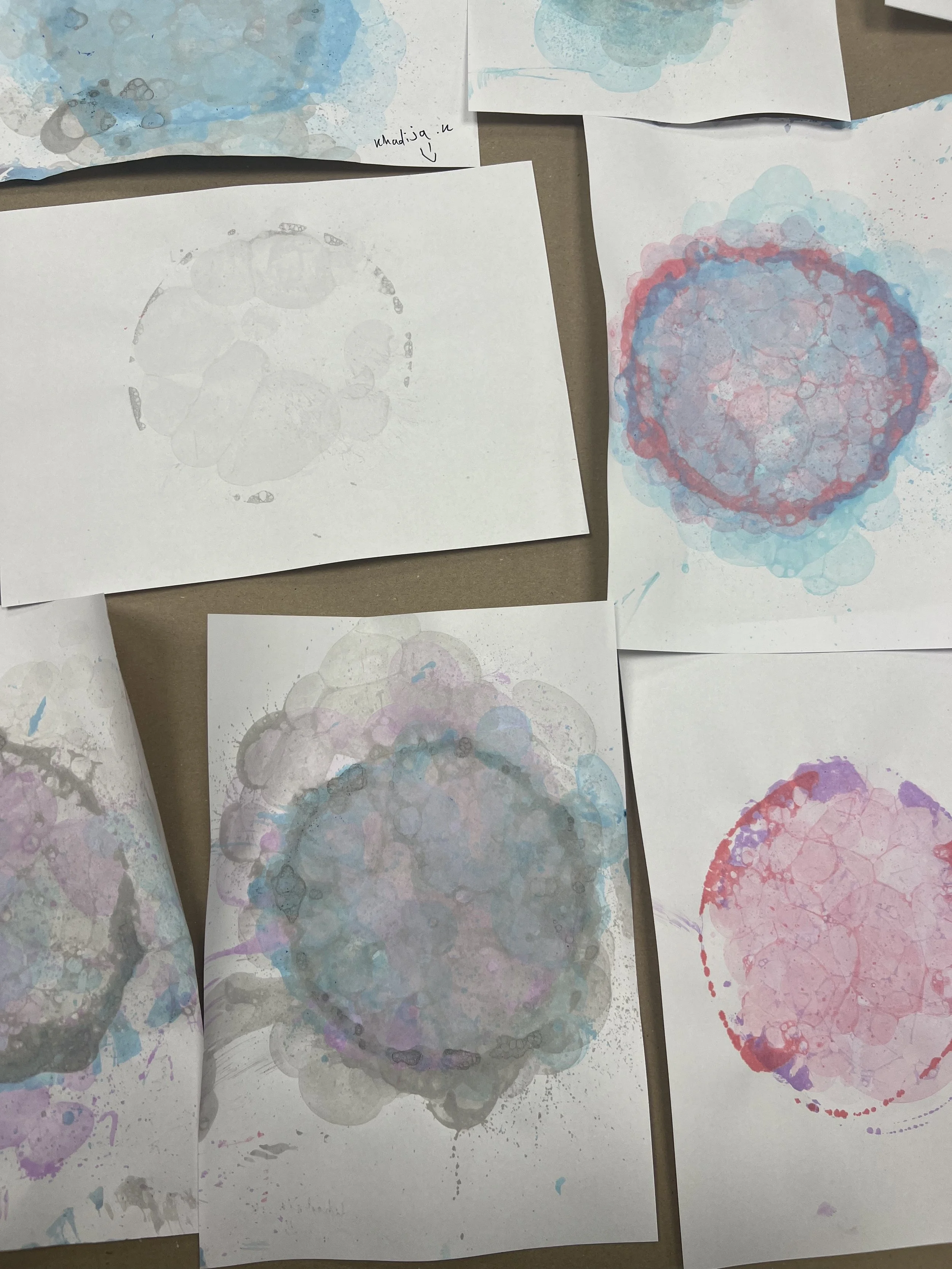
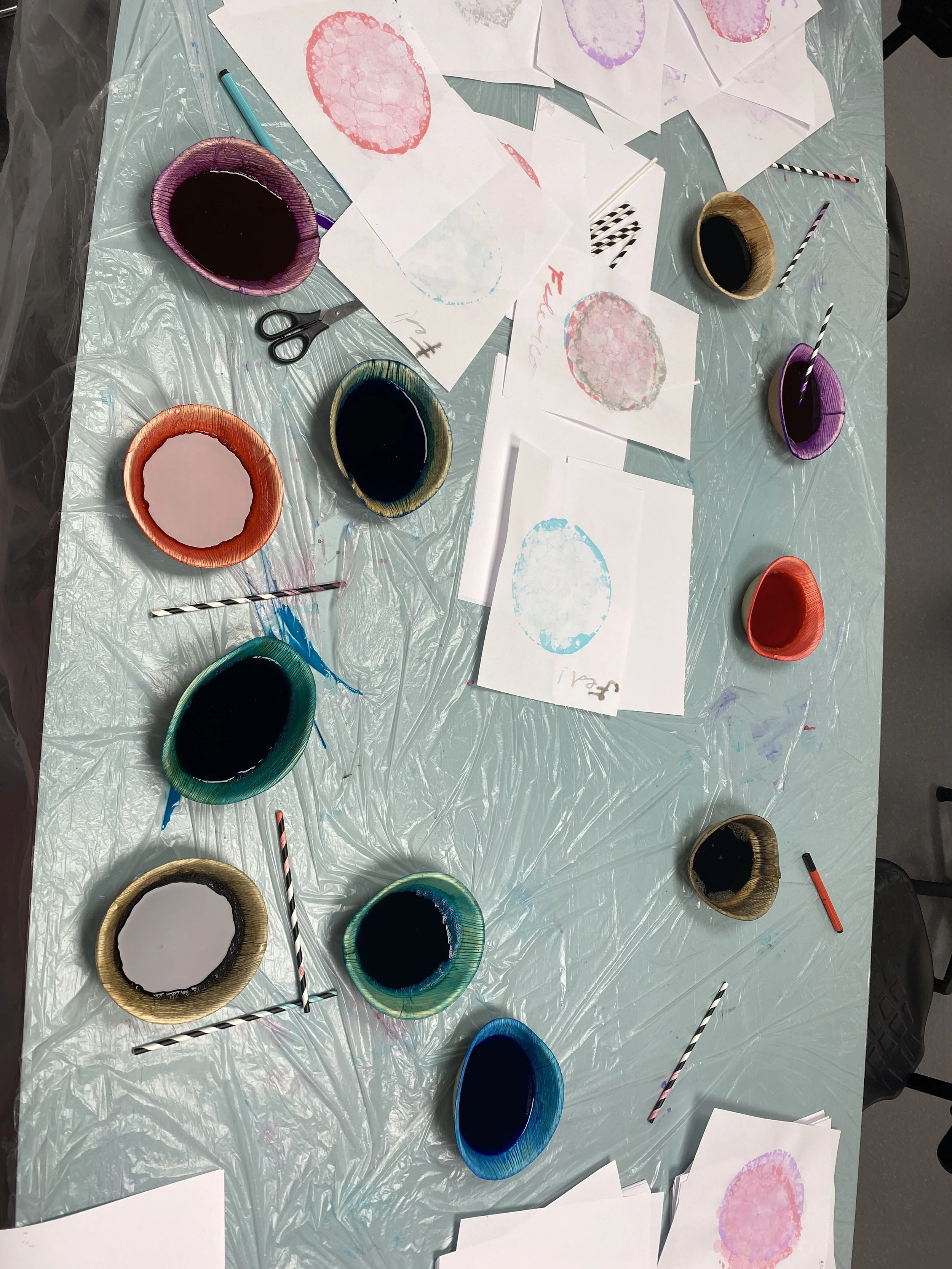
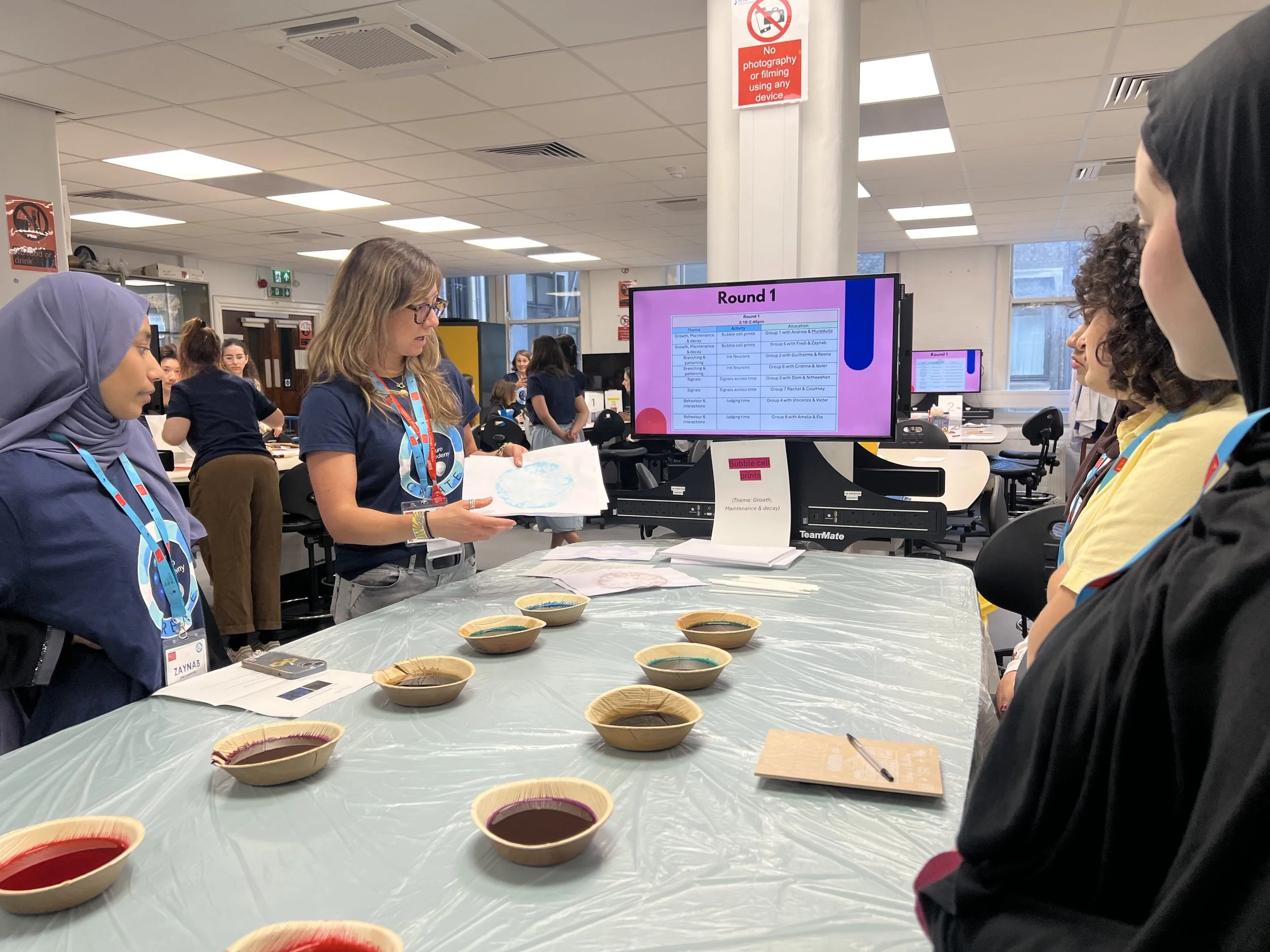
Blowing air into a bubble mixture produces bubbles which grow, and divide and pop and grow again. We explored cell growth, maintenance, division and decay through these bubble prints, many of which are representative of wider cell patterns.
Signals
Cells secrete molecules that can signal over distance to guide development of neurons. Chemical signals form gradients and interact to generate patterns. Neurons communicate using electricity. Bursts of electrical spikes of activity are converted into very short-range chemical signals at synapses.
Signals Through Time
We explored signals by looking at how one message moves through different creative mediums.
We started with a piece of music, which was translated into an image.
The image was then translated into a story.
The story was then read aloud, and in response carved as a 3D sculpture.
This sparked lots of investigation into what makes a good signal, how to differentiate between signals and noise, and how messages warp change and shift as they move through and in between minds, expressions and mediums.
Behaviour & Interaction
Instructions from the brain tell us to move and communicate, but also generate feedback from the environment. Behaviour is a product of intentions, learned responses and unconscious reflexes.
Judging Time
To explore behaviour and interactions we undertook an experiment: how does our perception of a minute change after engaging in different activities?
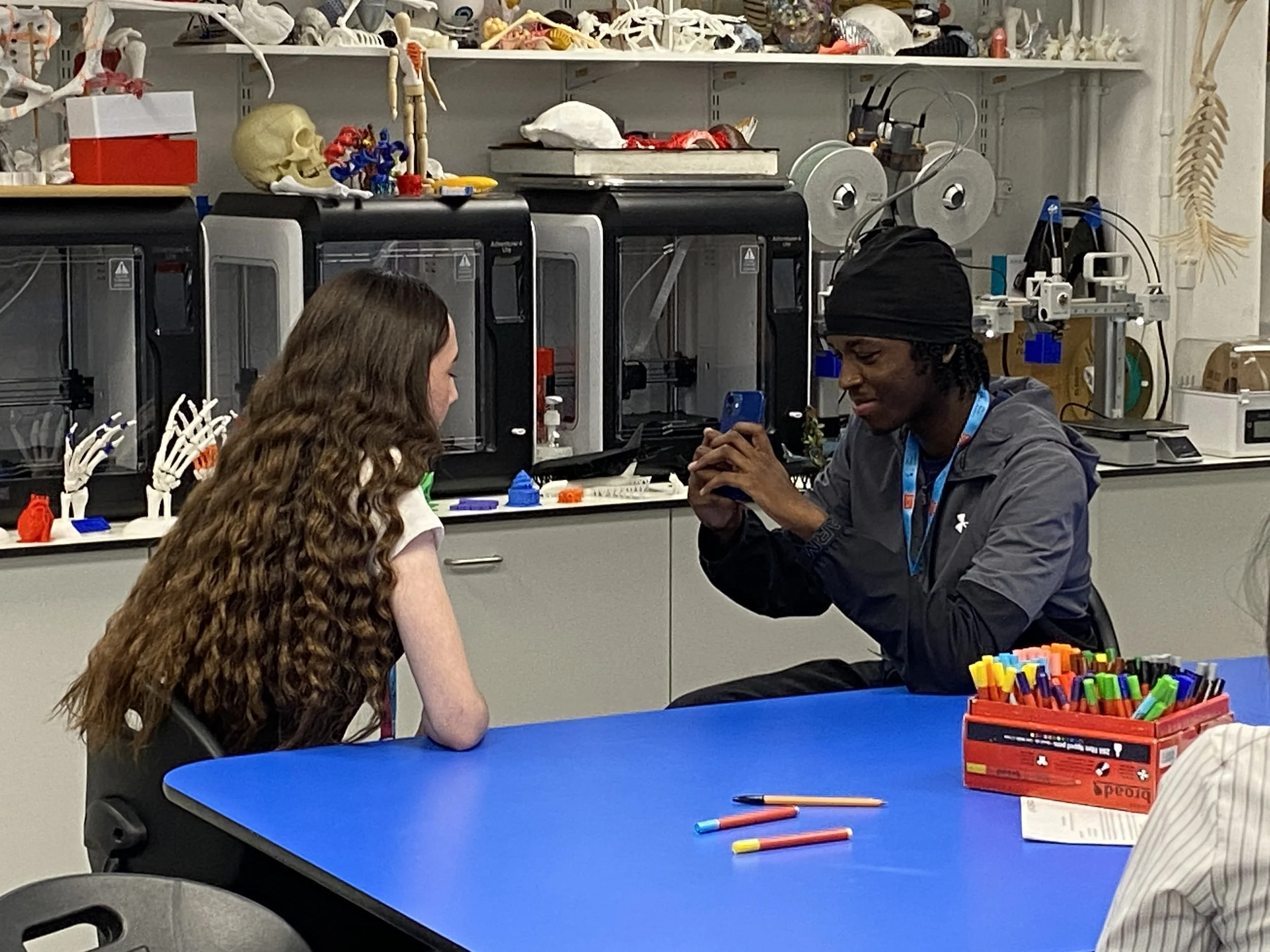
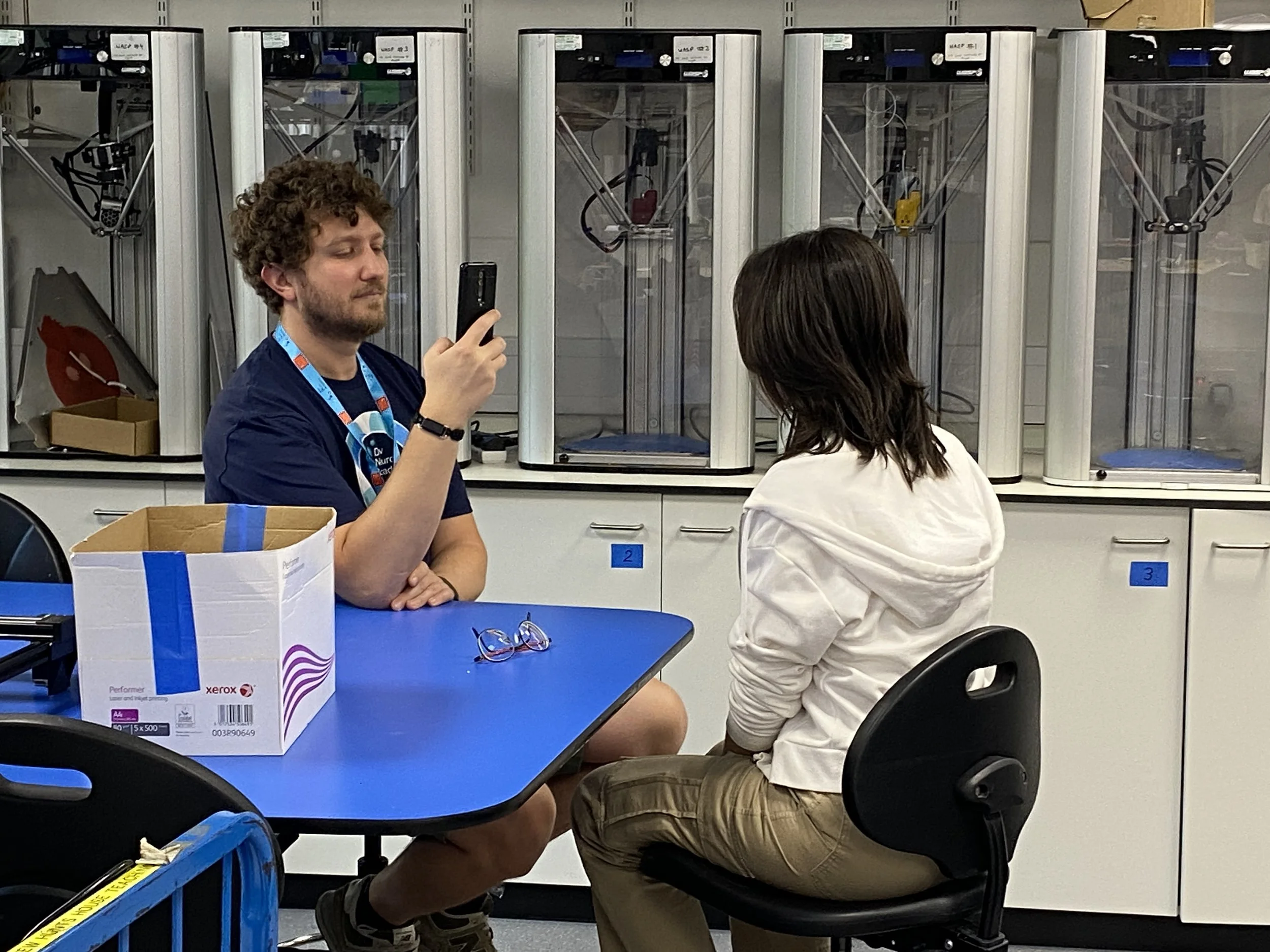
First the individual would spend one minute on social media, then try and judge a minute, by closing their eyes and opening them once a minute had passed. Then, they would move around the space, and judge a minute again, by closing their eyes and opening them once a minute had passed. Our hypothesis was that a minute would feel longer following social media, and shorter after moving.
DAY 2
Labs & Human Anatomy Session
On Day 2 Groups spent their morning taking part in lab visits and a human anatomy session.
Lab Visits
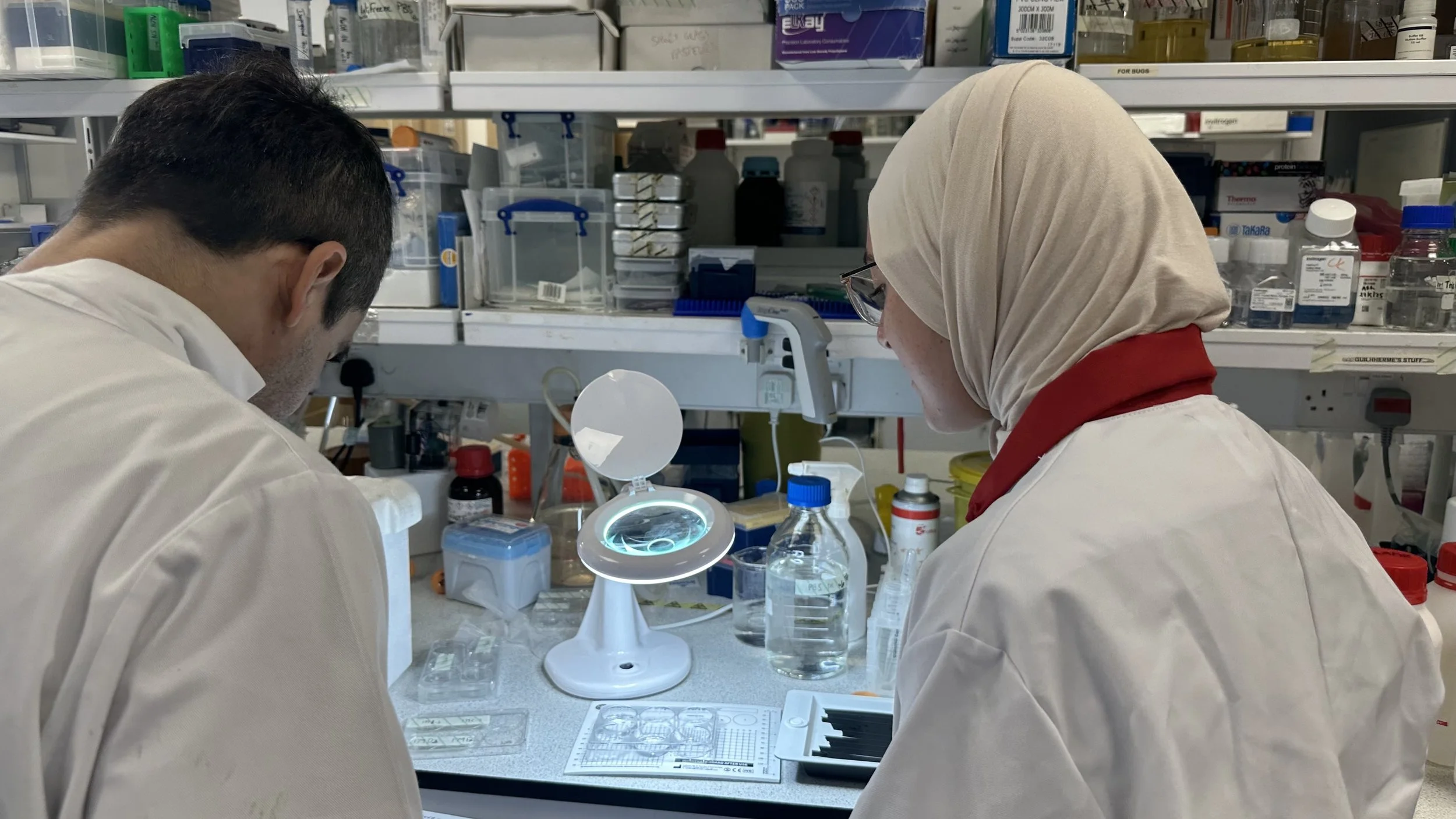
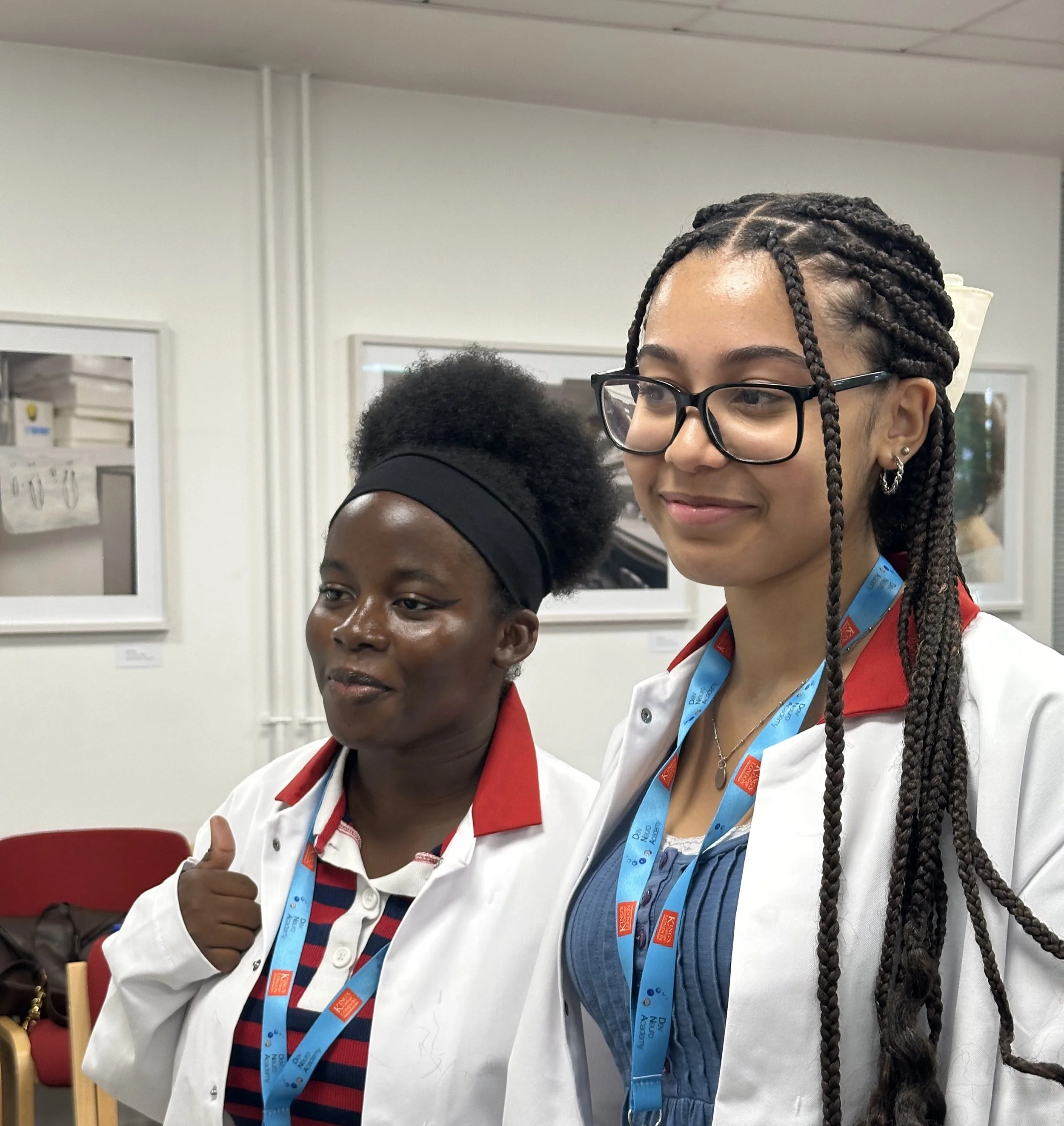
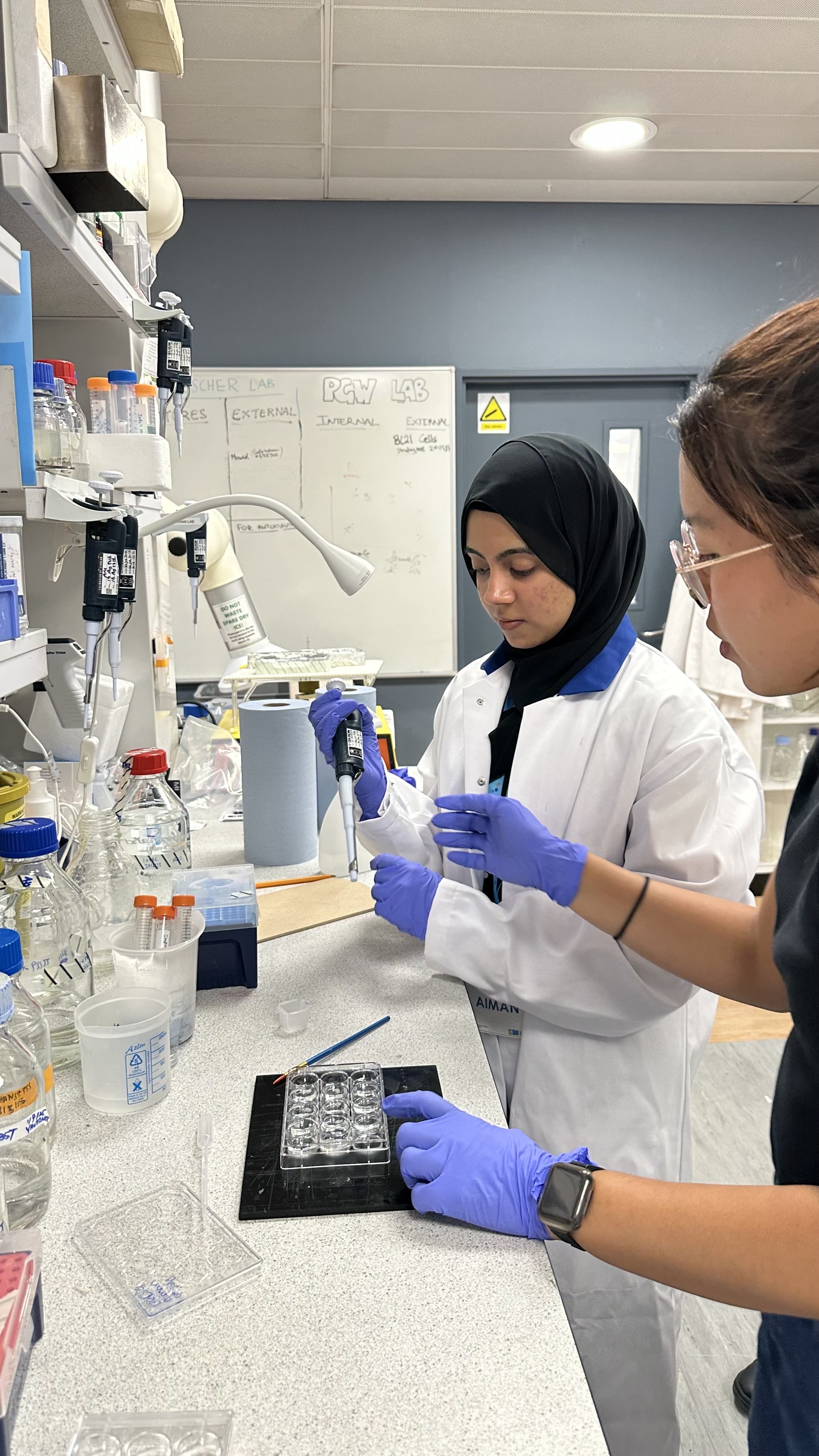
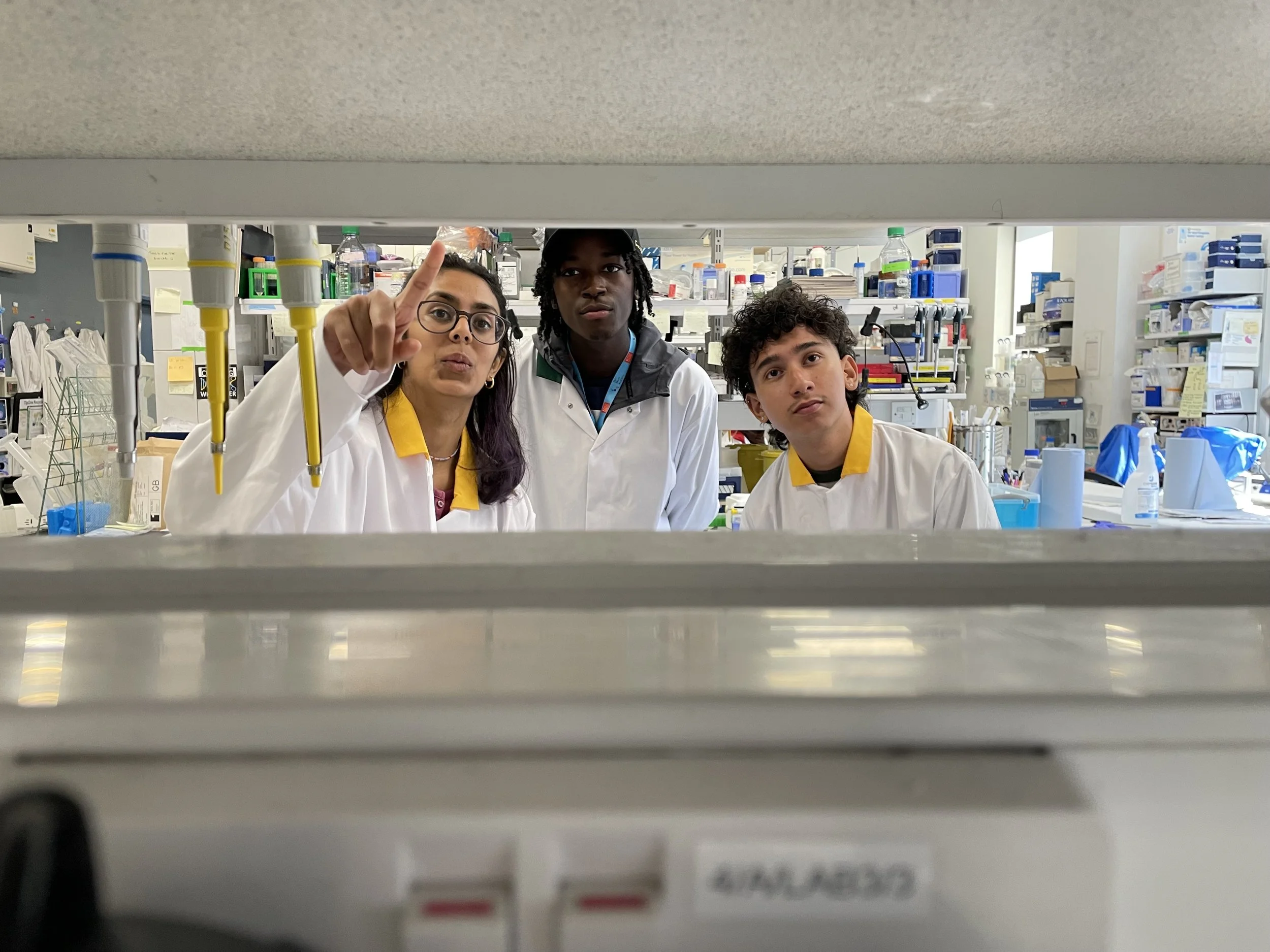
In the lab visit, participants visited different research groups to hear about their approach to studying brain development. Each research group investigates a distinct set of questions, using different perspectives and methods—ranging from electrophysiology at the level of neurons and synapses, to the genetics of brain patterning and its connections to behaviour. To address their research questions, they use a variety of techniques and model systems tailored to their specific focus.
Human Neuroanatomy Session
In the human neuroanatomy session, groups investigated the human brain through observation and touch. participants were able to hold a brain, and then were led through an interactive session by researchers and technicians to explore different functional neuroanatomical regions.
DAY 2
Creative Reflection
Wednesday afternoon began with some creative reflection.
Found Poetry
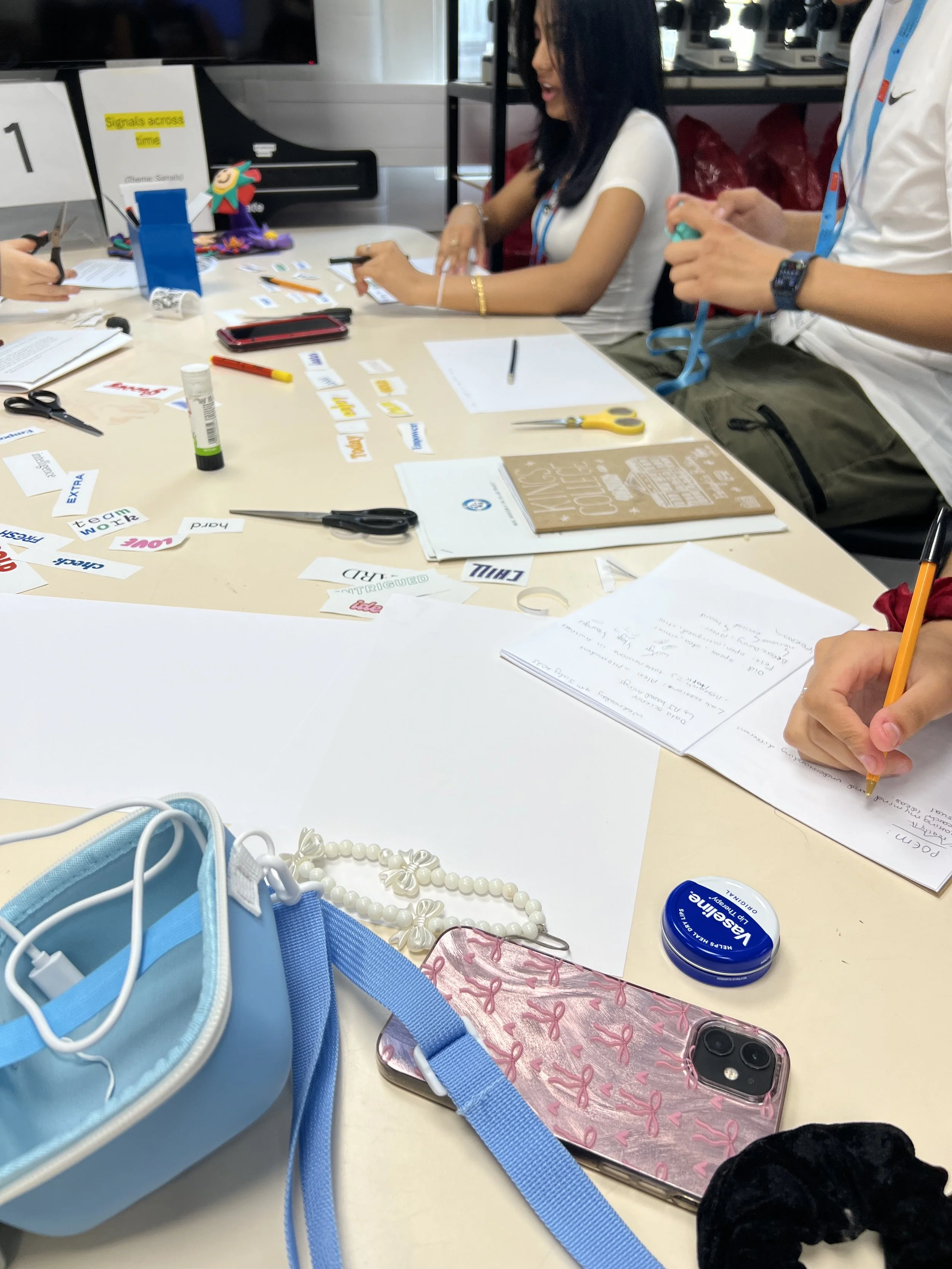
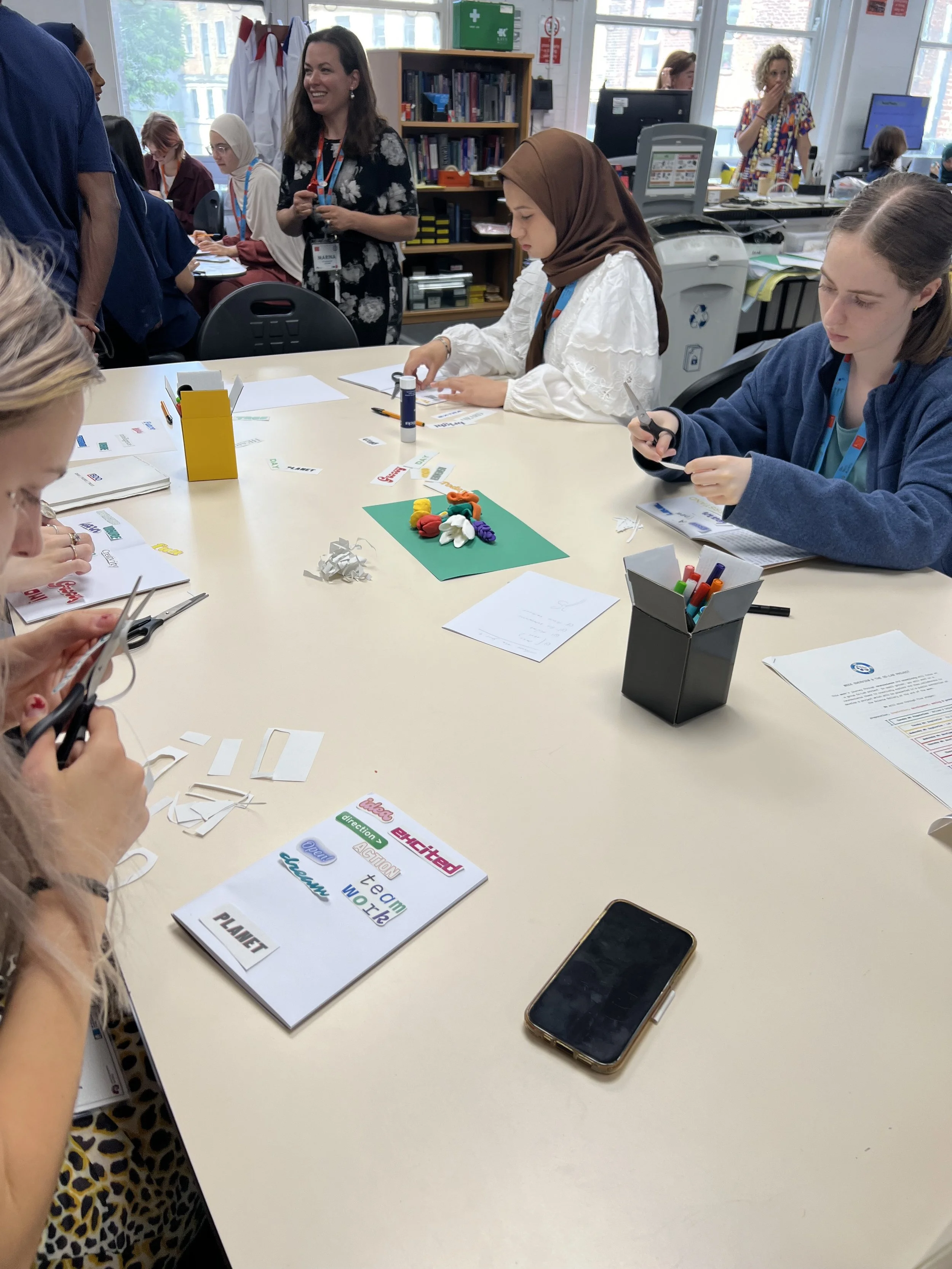
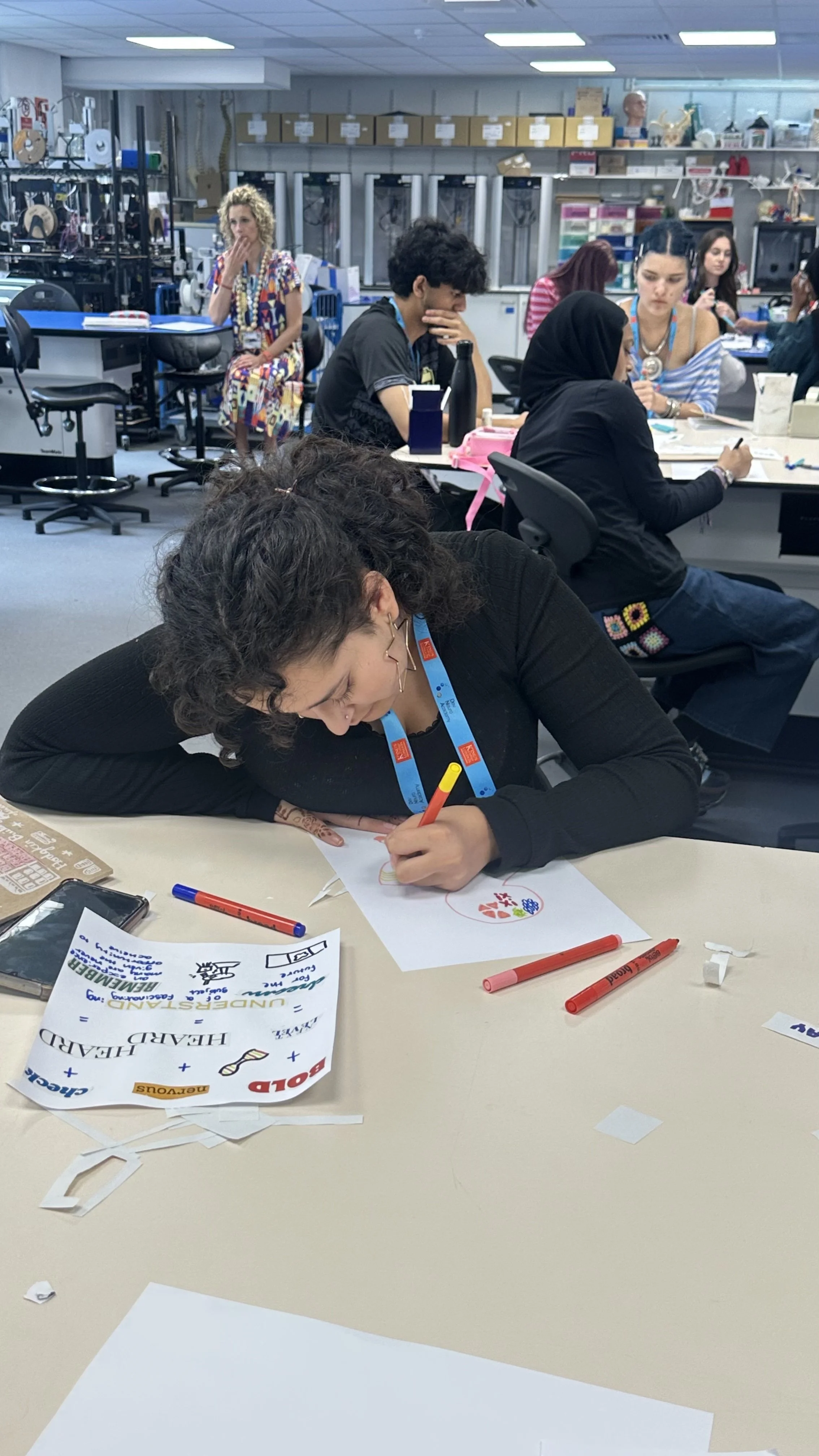
In the found poetry session participants reflected on their lab visit. Groups were given a pile of existing words, cut from newspapers and documents, and then asked to select words to represent what they thought and did, both before and during the session. Participants then built these words into a poem, sometimes texts which just used the words themselves, and sometimes texts which incorporated the words into a longer piece of writing.
Sensory Reflections
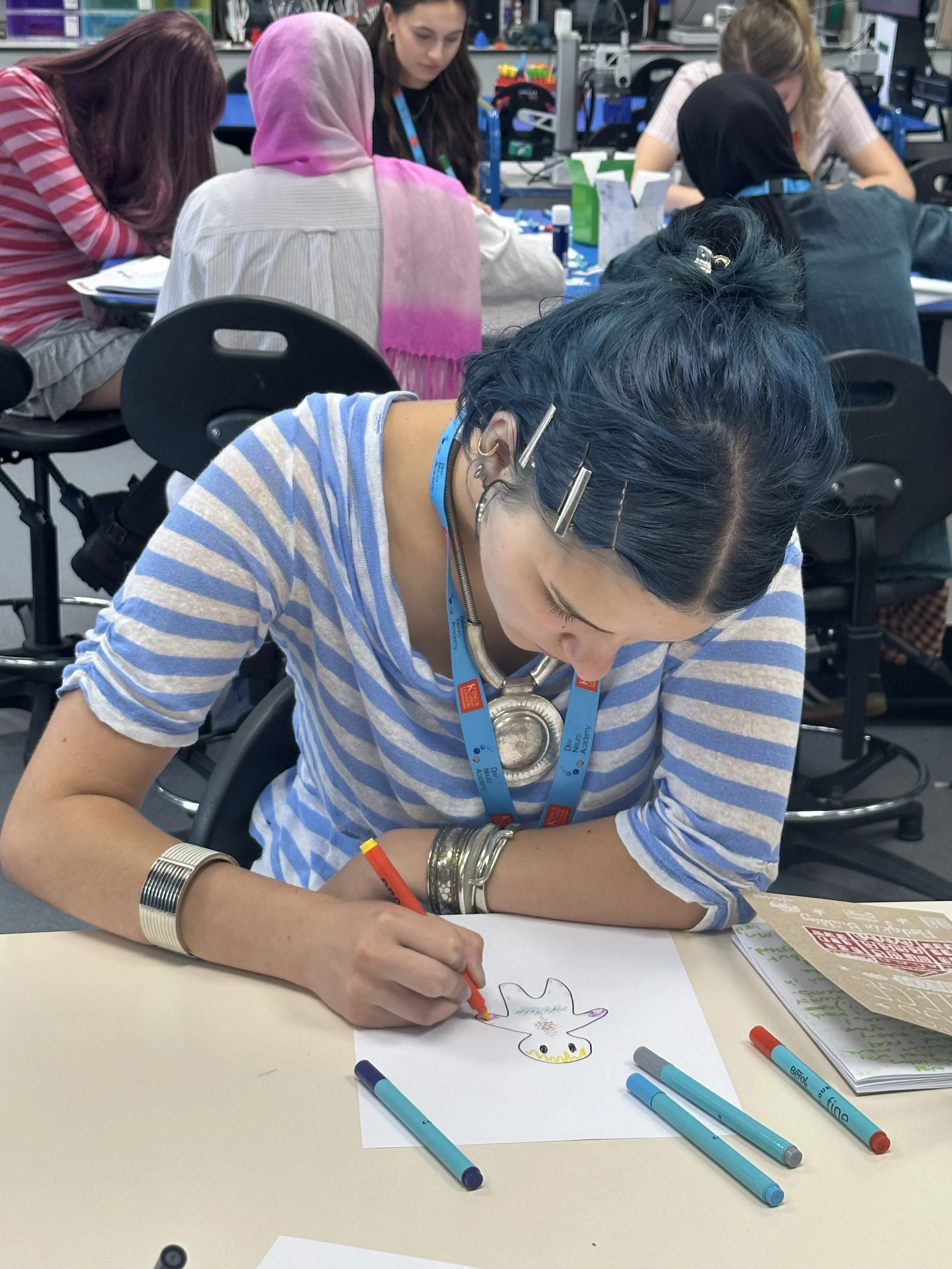
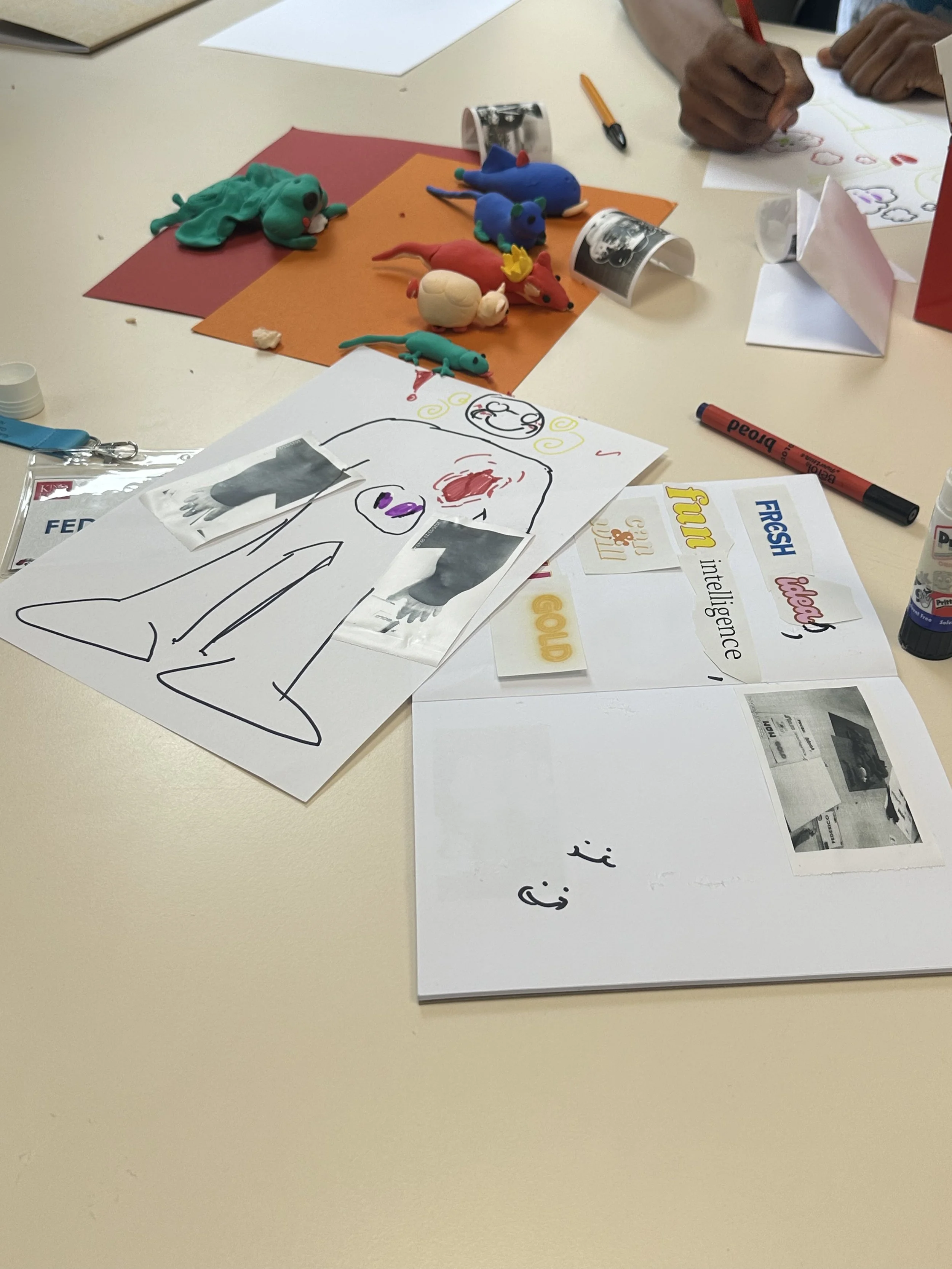
In the sensory reflection, participants were invited to think through their emotional and sensory responses to the human neuroanatomy session. They then mapped their sensations and emotions onto the outline of a human form, exploring what they felt in the session, and where they felt it in their body.
DAY 2
Later in the afternoon, participants broke into their groups to begin work on their projects. Each group was given one of the four themes to focus on, and then invited to reflect on their experiences from the morning and the day before - moments that stood out to them, ideas they wanted to investigate, questions they wanted to explore further - and think about how this might become a creative project.
For these creative projects, participants were pushed to think beyond science communication, to artworks and experiences that might offer a new perspective, or put a scientific process in dialogue with a theme or idea outside of the scientific realm - something emotional, narrative, surreal.
Wednesday ended with each group pitching their project. Now, everyone had a clear direction - we just had to get there!
Experience Design
DAY 3
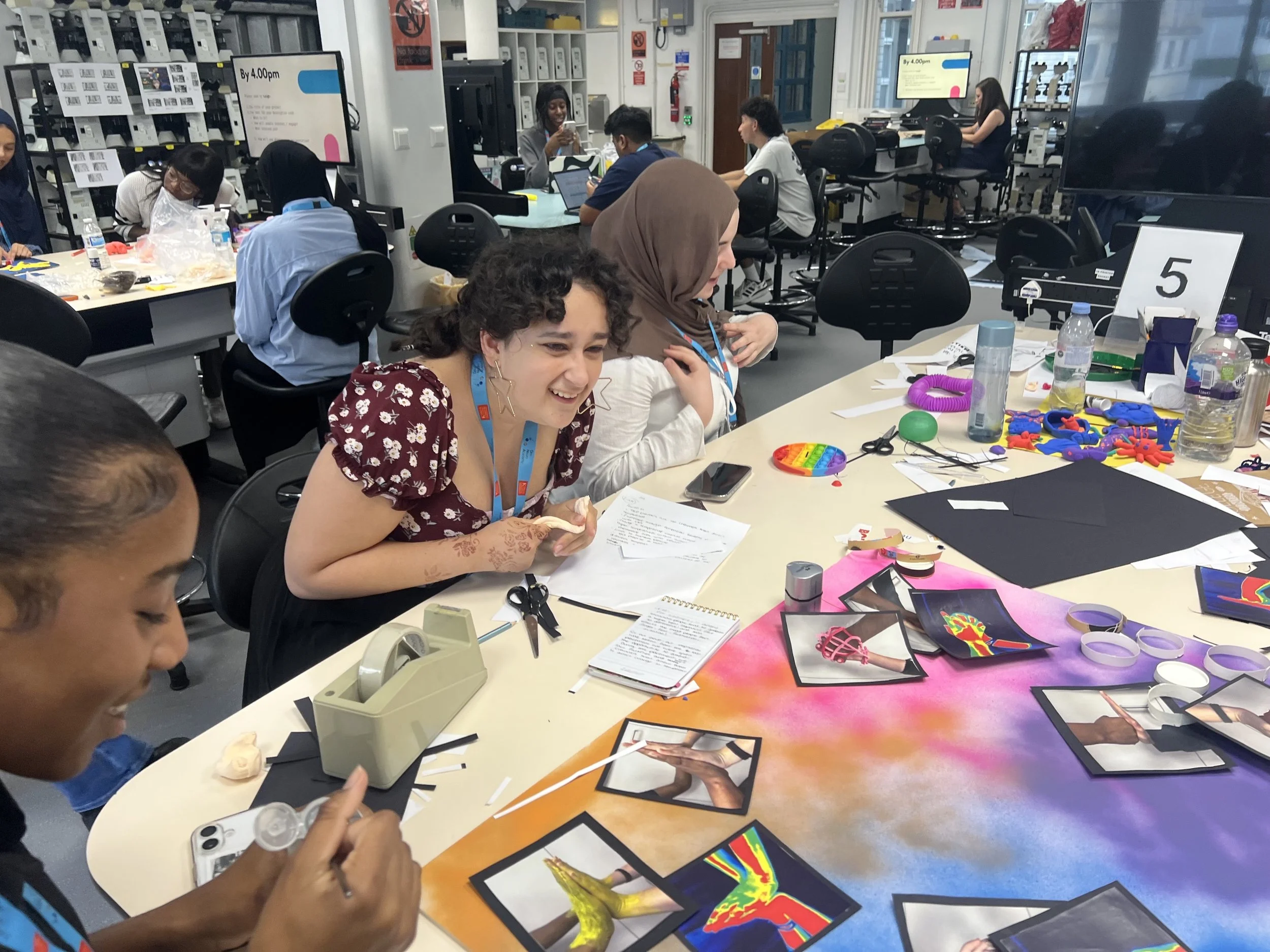
Thursday was project day - where each group’s projects went from an idea to an actuality.
We began the morning with concepts, and over a matter of hours final pieces emerged -from large pieces of spray painted fabric, to 3D installations, to interactive games.
Each group was encouraged to think about the way an audience member might experience their piece:
● How were they invited in?
● What did they do once they were there?
● What happened when they left? What were they invited to take with them?
Exhibition Preparation
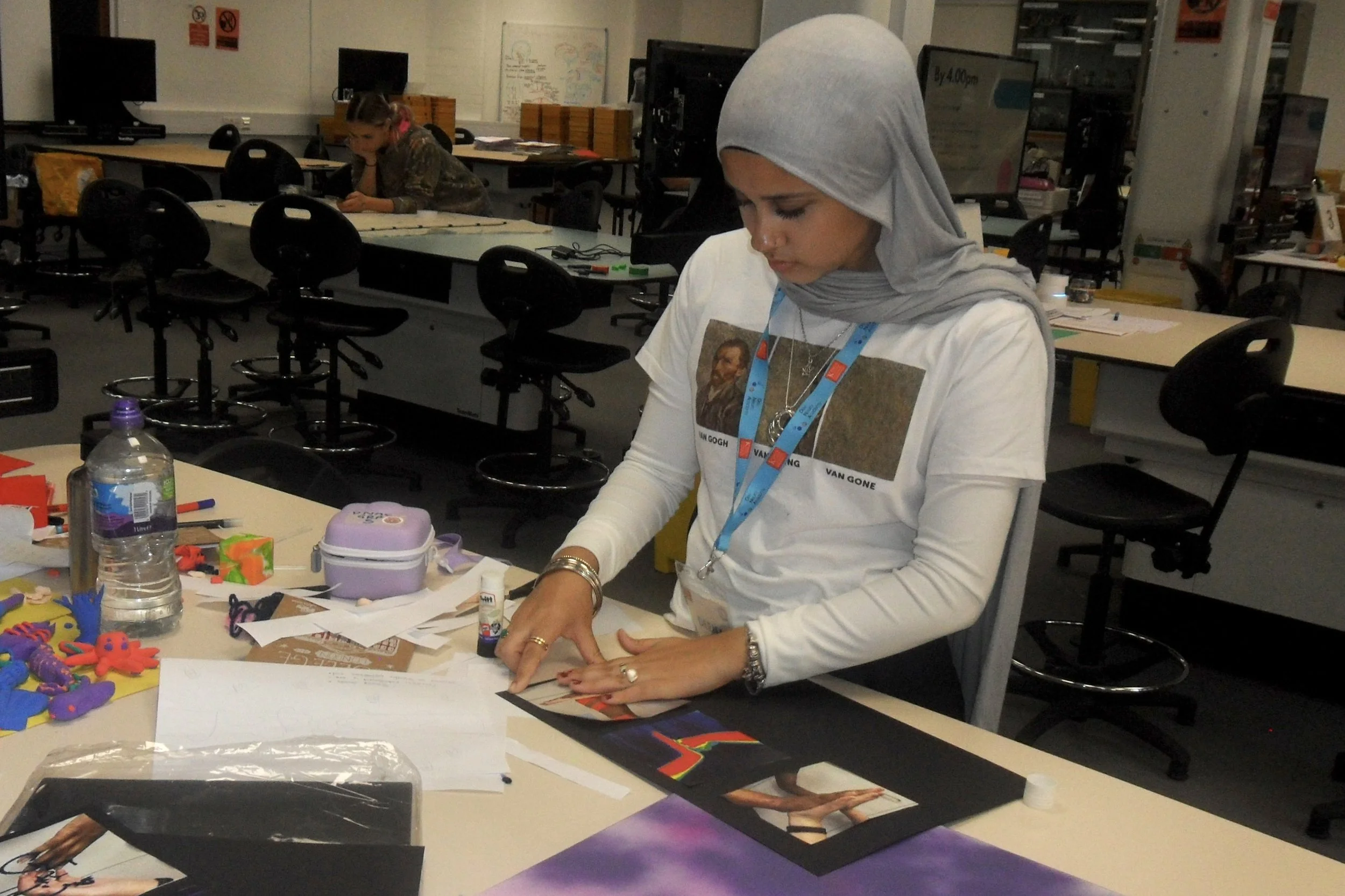
We spent the final hours of Thursday preparing for the exhibition the following day. Each group was invited to give a presentation of their project, and have a member of their team join a Q&A panel to talk about their process. Groups wrote short pieces of descriptive and interpretative text to describe their projects, and gathered together photo documentation to share the creative and scientific journey they had been on.
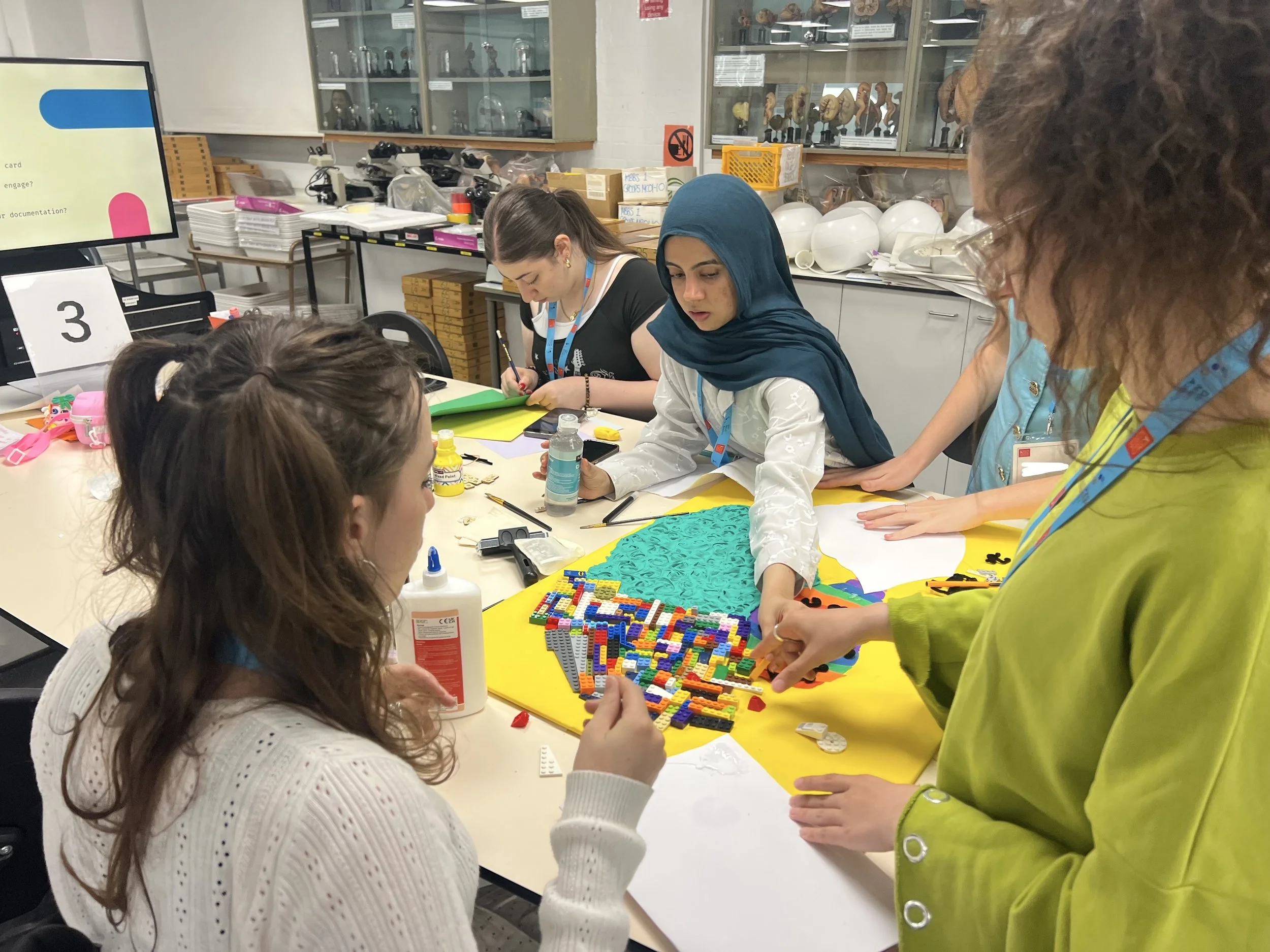
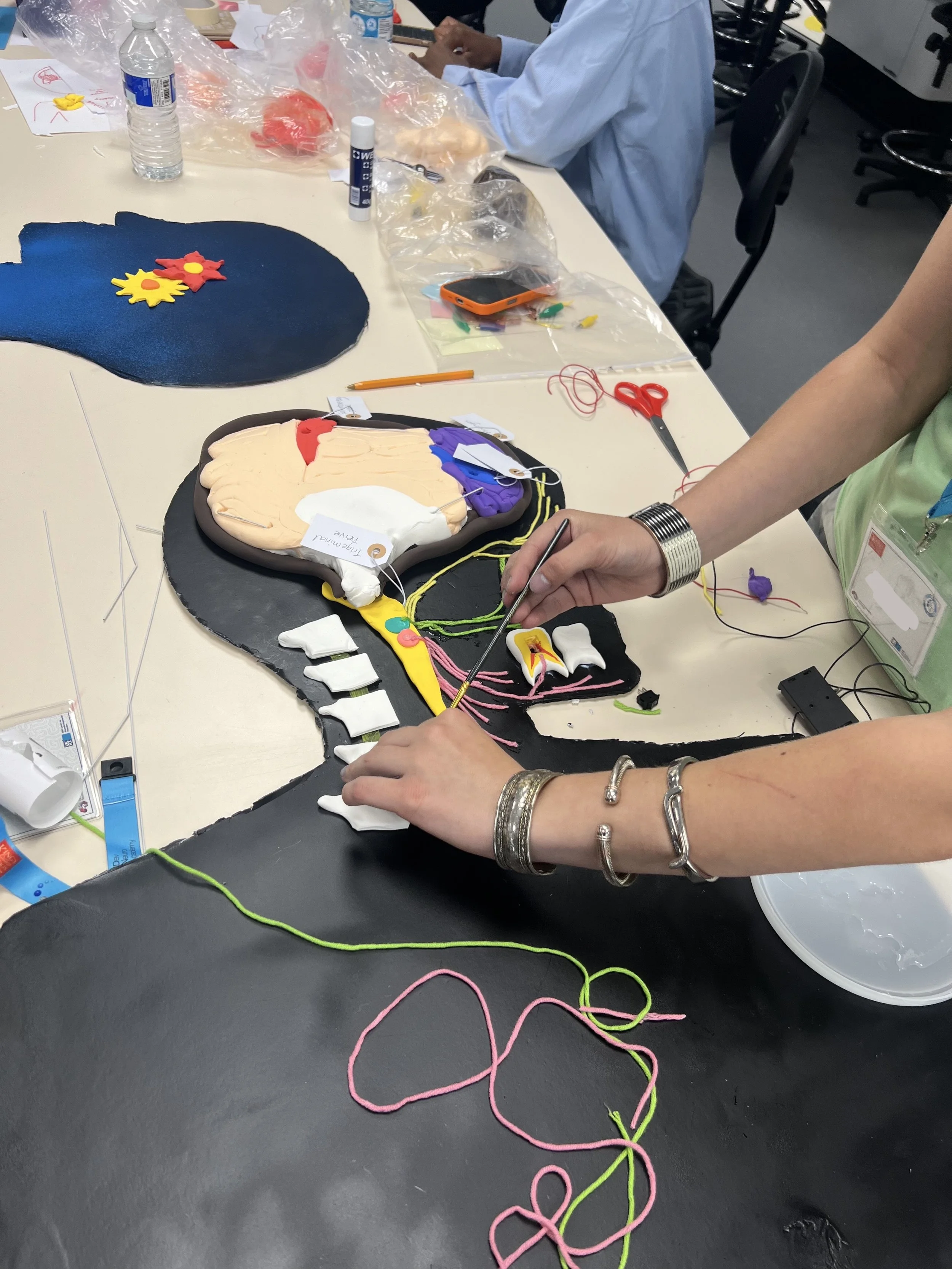
DAY 4
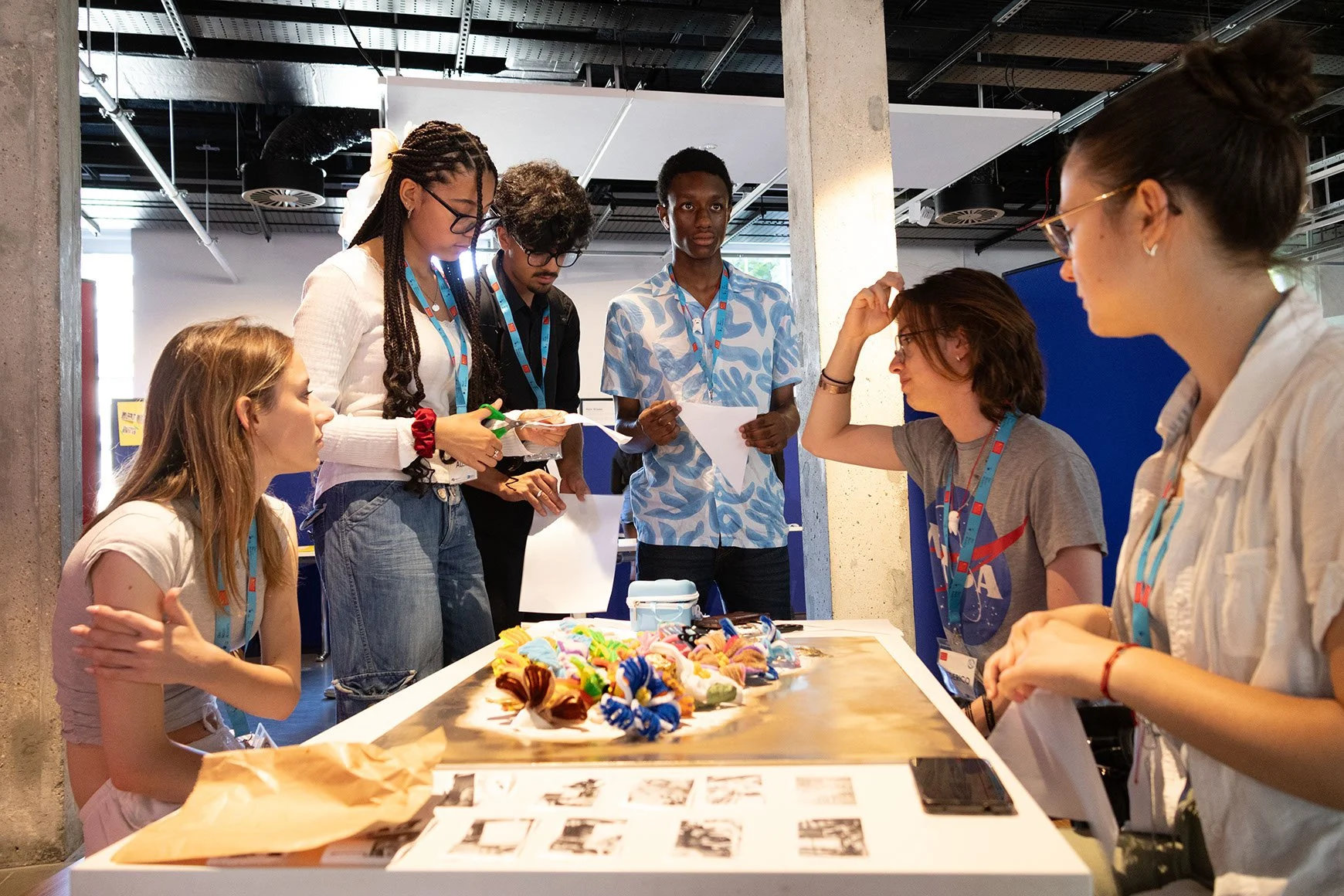
Friday was exhibition day. Over the morning we installed the eight projects into the Exhibition Space at the Science Gallery London. After a rehearsal of the group presentations, and a step through of the Q&A, we were ready to go!
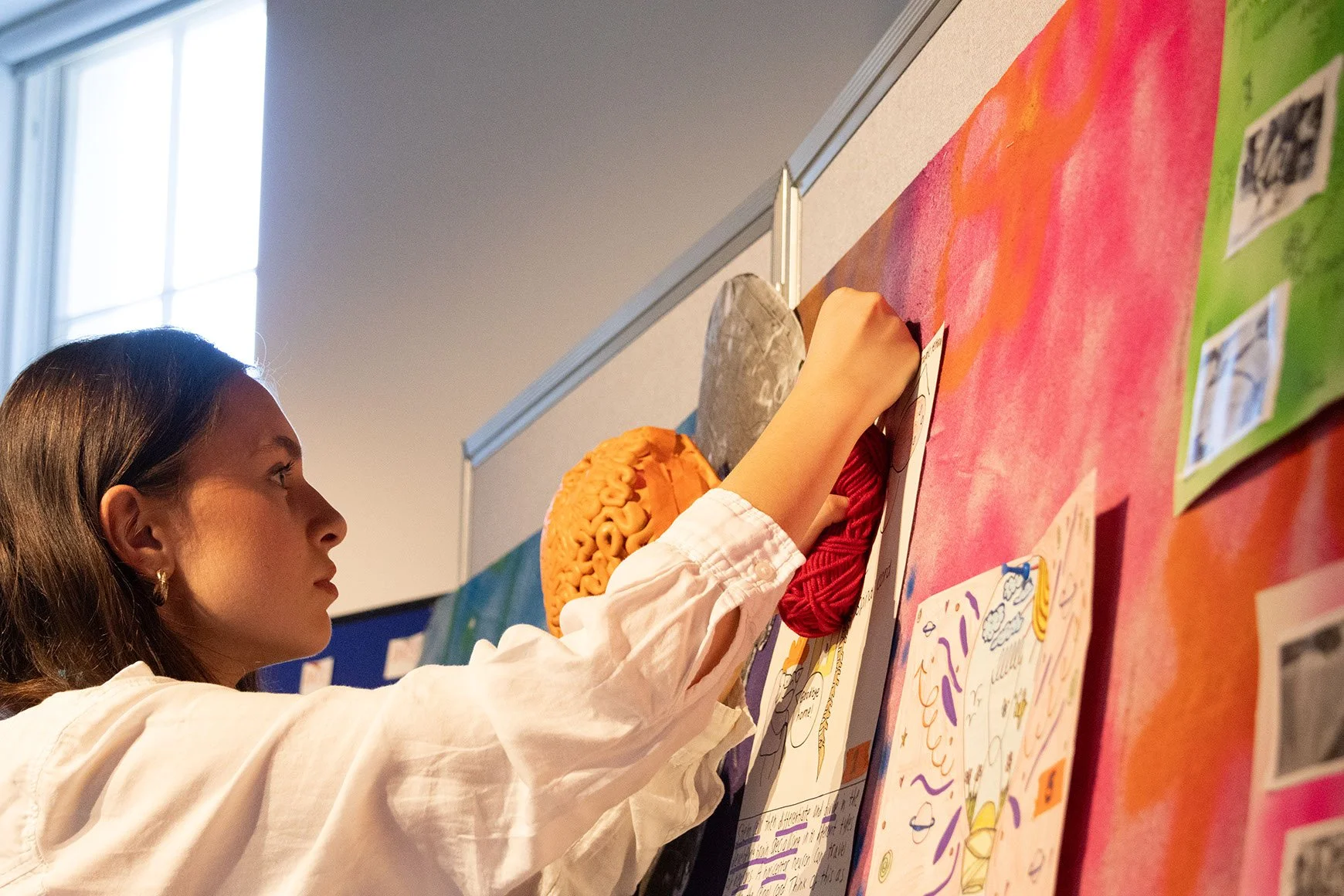
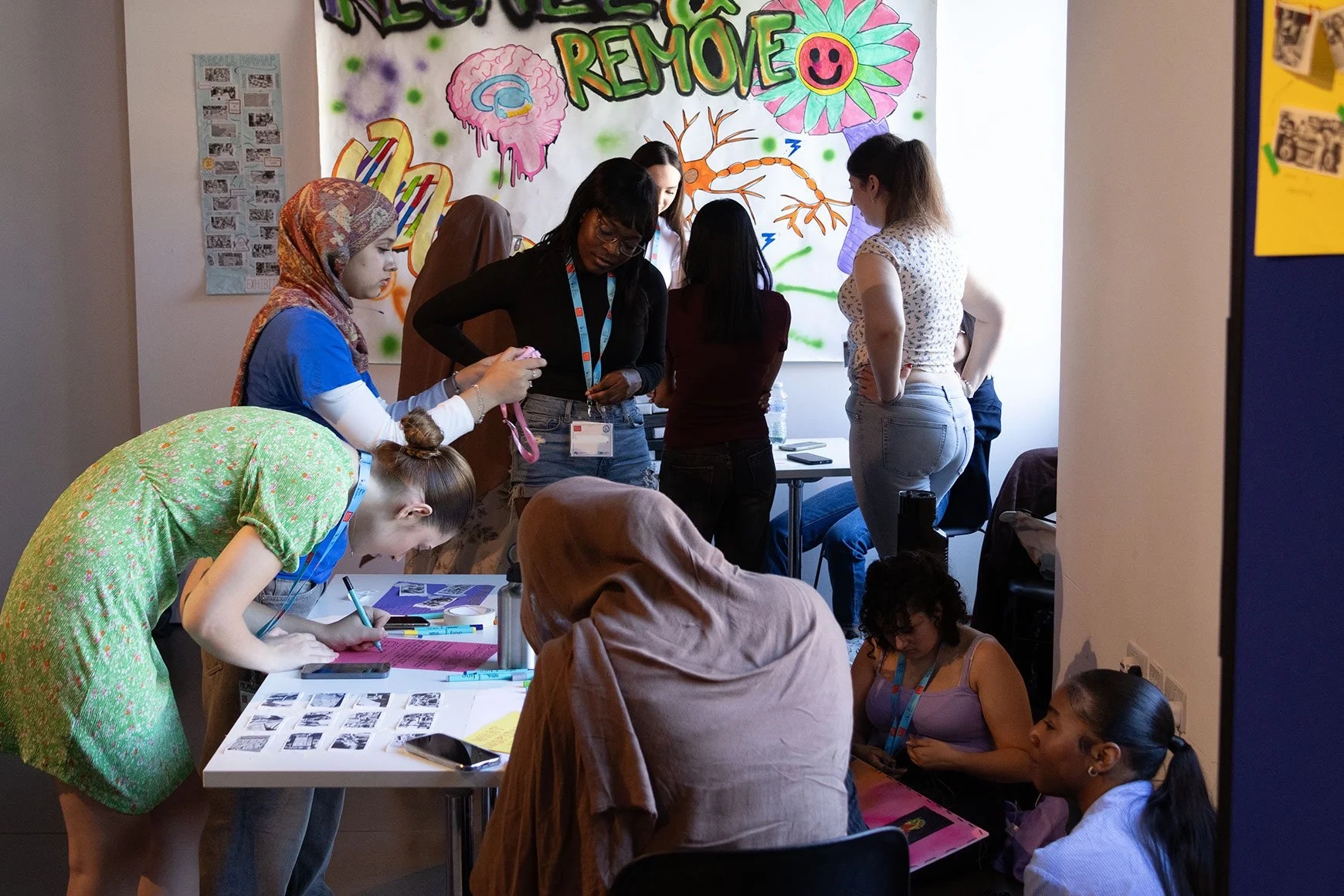
A mixed audience of parents, teachers, researchers and artists gathered in the Science Gallery space that afternoon. Over a matter of hours participants led them through a retrospective on the week, and an insight into each of the eight projects. You can read more about the exhibition and event here.
The event and week ended with a celebration of each and every participant and a graduation from DNA CREATE week.